The pursuit of permanent living within modular structures often begins with a simple calculation of square meters. Yet, anyone who has actually lived inside a standard shipping container knows the real problem isn’t the size. It’s the shape of life inside it.
You can add insulation. You can add wiring. You can even make it look stylish.
But if the space itself never changes, daily life slowly starts to feel… compressed.
That’s where the evolution from a container to a home really happens.
Not with finishes. Not with furniture.
But with the moment the walls can finally move.
This is the quiet power of expandable container homes.
Why Standard Containers Start to Feel Small — Even When the Numbers Say They’re Not
Standard ISO containers are incredible at what they were designed for: stacking, shipping, and surviving the open sea. As living spaces, though, they come with a built-in personality problem.
They’re long. They’re narrow. And they only think in one direction.
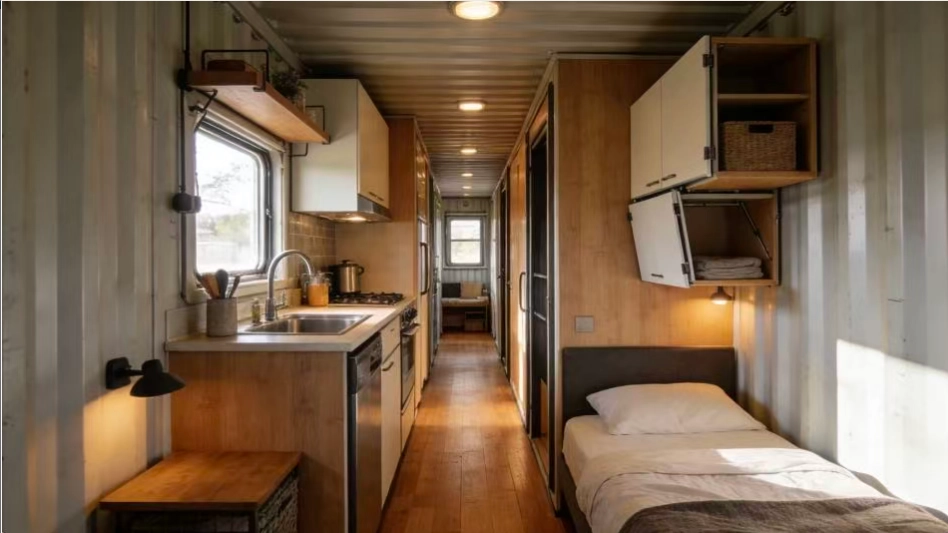
Living in a traditional container home often feels like living in a hallway with furniture.
The bed, the kitchen, the table, the sofa — everything lines up like train cars.
There’s no real “room.” No pause. No separation.
It’s like living in a studio apartment where you can see your pillow from the stove.
Fine for a weekend. Tolerable for a few months.
But over years? It starts to wear on you.
Sound travels. Smells travel. Moods travel.
When one person is awake, everyone is awake.
When one person works, everyone is “at work.”
There’s no place for life to breathe.
And that’s the part most floor plans don’t show.
This is why so many people who try permanent container living in standard boxes quietly admit:
“It works… but it doesn’t quite feel like a home.”
What Expandable Designs Actually Change (And Why It Matters)
This is where an expandable container house changes the story.
Not by just making things bigger.
But by finally letting space behave like space.
When an expandable unit opens, it doesn’t just add square meters.
It creates rooms.
Suddenly, the bed is no longer next to the sink.
The dining table isn’t sharing air with the bathroom.
The work corner doesn’t stare directly at the couch.
Life starts to separate in healthy ways.
It’s the difference between sleeping in the living room and actually having a bedroom.
Between working at the kitchen table and having a place where your brain knows it’s time to focus.
That psychological shift is massive for long-term living.
People underestimate how much layout affects emotion.
But anyone who has lived in tight, undivided spaces knows the truth:
When everything touches everything, your mind never really rests.
This is why many modular housing solutions (https://gsmobilehouse.com/container-house/ )are starting to move away from rigid box layouts and toward designs that can physically unfold and reorganize space — not as a feature, but as a necessity.
Why This Matters in Real Long-Term Scenarios
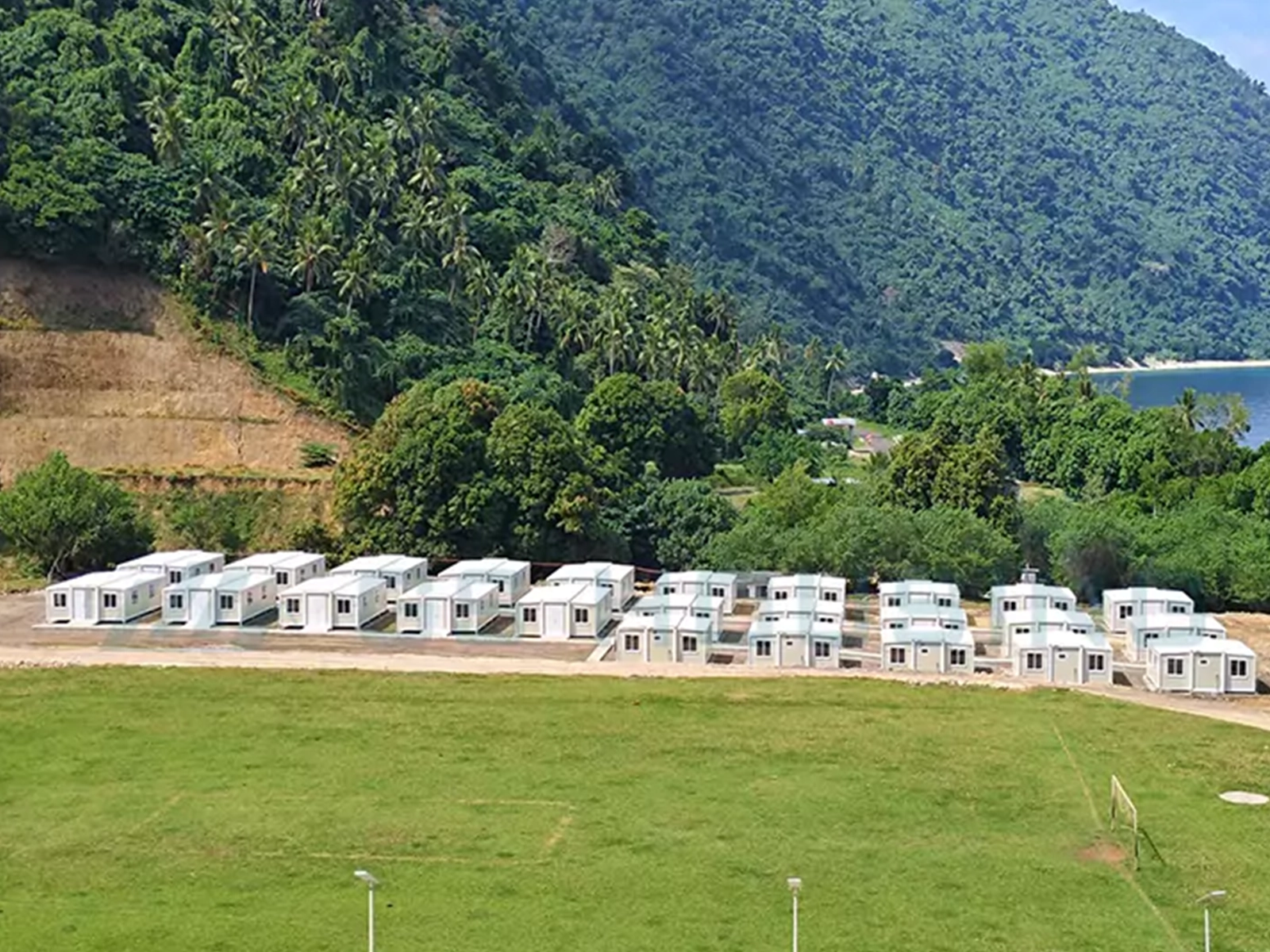
In multi-year workforce camps, this zoning changes everything.
A worker can sleep without hearing someone cooking.
He can sit alone without feeling isolated.
He can close a door and actually be off shift.
That’s not comfort. That’s dignity.
This is also why companies that develop long-term accommodation projects are increasingly choosing expandable systems for worker housing, especially in remote or high-intensity environments. Solutions like the modular camps and workforce housing projects delivered by GS Housing(https://gsmobilehouse.com/container-house/ ) show how zoning and layout directly impact morale, retention, and daily stability — not just square footage.
When Housing Needs to Grow With Life
In urban edge communities and transitional housing zones, expandable layouts solve a different problem: change.
A child grows.
A parent starts working from home.
An elderly family member moves in.
Static layouts struggle with this.
Expandable container homes don’t.
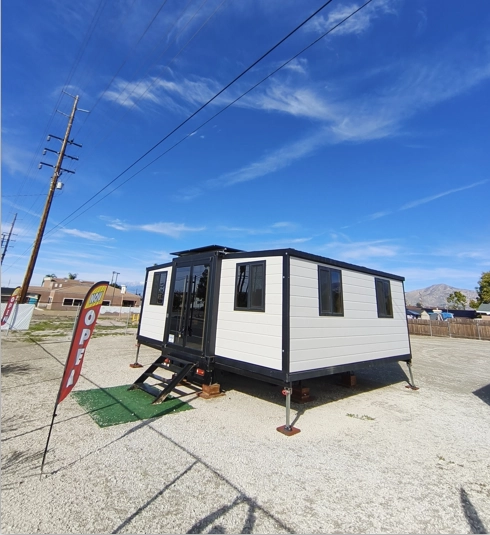
A core unit can stay fixed while additional space unfolds when needed — a home office, a second bedroom, a quiet corner for rest. This is where modular container housing becomes a real urban housing solution, not just an emergency fix.
Projects that use expandable systems, like the prefabricated housing and standard house solutions from GS Housing(https://gsmobilehouse.com/20ft-expandable-container-house-your-flexible-space-solution/), are designed around this kind of lifecycle thinking — housing that adjusts as people’s lives do, without demolition or relocation.
Not Bigger for Show — Bigger for Life
There’s a misunderstanding that expandable systems are about showing off size.
They’re not.
They’re about giving each part of life its own place.
Cooking belongs somewhere.
Rest belongs somewhere.
Work belongs somewhere.
Privacy belongs somewhere.
When all of that is forced into one narrow channel, life feels messy even when it’s not.
When space can unfold, life can organize itself.
That’s the real innovation here.
Not mechanics.
Not steel.
Not engineering.
Human logic.
Why This Matters More Over Time (Not Less)
Here’s something people rarely say out loud:
You don’t feel space problems on day one.
You feel them on day 300.
When routines set in.
When small irritations repeat.
When there’s nowhere to hide for five minutes.
That’s when layout becomes emotional.
That’s when rigidity becomes fatigue.
Expandable container homes age differently because they were never locked into one way of living.
They adapt as life adapts.
And that’s why they quietly outperform static designs in long-term use.
Not because they’re smarter.
But because they’re kinder to the people inside them.
A Different Way to Think About Modular Living
Expandable systems challenge an old assumption:
That modular means fixed.
That prefabricated means inflexible.
That efficient means uncomfortable.
In reality, good modular housing should behave more like a living organism than a shipping box.
It should stretch when needed.
It should close when not.
It should evolve.
This is exactly the design philosophy behind GS Housing’s expandable container homes(https://gsmobilehouse.com/our-team/) — building systems that prioritize long-term usability over short-term convenience.
The Part No One Talks About Enough
When people talk about permanent housing, they talk about structure.
They talk about codes.
They talk about lifespan.
Rarely do they talk about how it feels at 10 p.m. on a Tuesday.
When you’re tired.
When it’s raining.
When you just want quiet.
That’s when the walls matter.
That’s when space becomes emotional, not technical.
And that’s where expandable design proves its real value.
Final Thought — Why This Isn’t About Buildings
In the end, this isn’t really about containers.
It’s about what happens when someone closes a door and feels, for the first time in a long day:
“I’m home.”
Not “I’m housed.”
Not “I’m sheltered.”
Not “I’m temporarily staying.”
But home.
A place with corners.
A place with distance.
A place with its own rhythm.
Expandable container homes don’t just give you more room.
They give life room.
And for anyone thinking about long-term container living, that difference is not small.
It’s everything.