If you run a homestay, boutique lodge, or small tourism project, you already know this feeling.
You find a great location.
You imagine how it will look on Instagram.
You picture guests arriving just in time for peak season.
Then reality steps in.
Construction drags on.
Budgets quietly stretch.
And by the time the rooms are finally ready, the season — and the attention — has already moved on.
For many tourism operators, the biggest frustration isn’t lack of ideas.
It’s losing momentum before the project ever has a chance to shine.
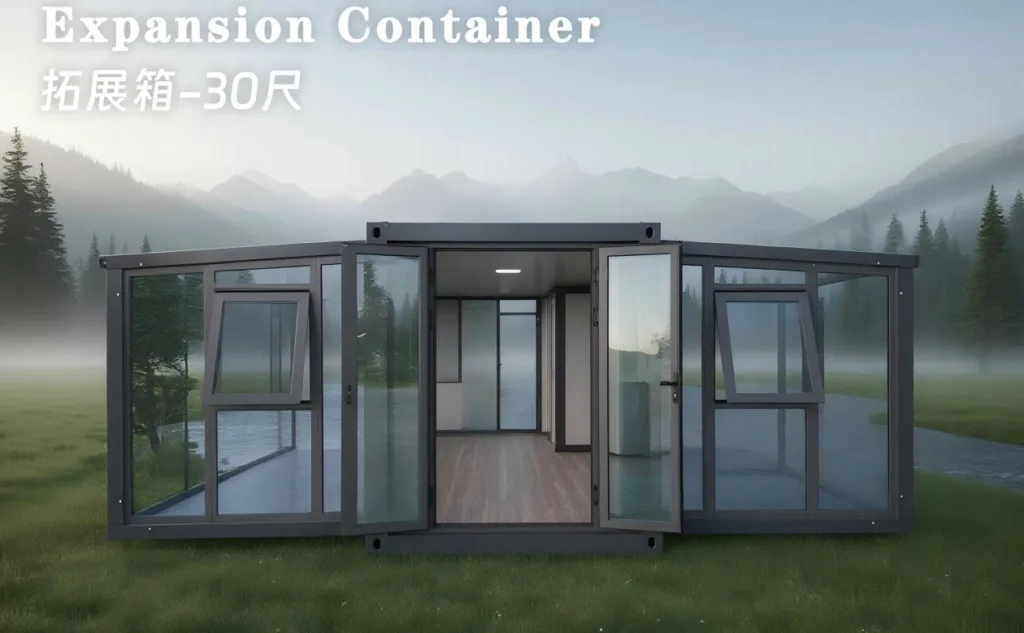
That’s why more homestay owners and small tourism investors are rethinking how they build — and why modular hotels and expandable container solutions(https://gsmobilehouse.com/container-house/) are becoming part of that conversation.
The Real Pain Points Only Tourism Operators Talk About
Traditional construction problems are easy to list.
What’s harder to explain is how they feel when you’re running a tourism business.
You don’t just lose time — you lose timing.
A delayed project doesn’t just open “later.”
It misses a holiday window.
It misses a social media trend.
It misses the moment when your destination is hot.
Many homestay owners start with a clear budget, only to realize halfway through that there’s no money left for the details that actually make guests stop and take photos — the deck, the window wall, the outdoor tub, the signature view.
The result?
A finished building that works, but doesn’t stand out.
And in today’s tourism market, “fine” isn’t enough.
If your place doesn’t photograph well, it doesn’t travel online.
If it doesn’t travel online, bookings slow down — no matter how good the location is.
This is why operators start searching not just for builders, but for alternatives that protect both budget and visibility.
Why Expandable Container Hotels Make Sense for Tourism Projects
Expandable container systems weren’t designed for hotels — but they fit tourism projects unusually well.
The biggest shift is where the work happens.
Instead of months of on-site building, most of the structure, insulation, wiring, and interior work is completed indoors at the factory. When the unit arrives, it’s already close to finished.
For tourism operators, this changes three things immediately:
Time becomes predictable
Costs stop creeping upward
Design decisions happen early, not mid-construction
This is especially important for operators who care about fixed investment planning. When people ask about permanent container housing cost, they’re usually asking a deeper question:
“Can I lock my costs before the project starts — and keep them locked?”
Expandable container solutions make that possible far more often than traditional builds.
What “30 Days to Opening” Really Looks Like in Practice
You’ll often hear “30 days” mentioned with modular hotels.
That doesn’t mean rushing. It means eliminating dead time.
Here’s how the rhythm usually plays out on real tourism projects.
The first phase is conversation, not paperwork. Location, terrain, views, climate, and guest experience are discussed early. Experienced suppliers — including teams like GS Housing (https://gsmobilehouse.com/about-us/)— focus on aligning standard modular units to the site instead of reinventing the structure every time.
Once the concept is clear, design moves fast. Layouts are adjusted for views, privacy, and circulation. Decisions that normally happen during construction are forced upfront — which is uncomfortable at first, but saves weeks later.
While foundations are being prepared on-site, the units are already being built in the factory. That overlap is where most of the time savings come from.
By the time transport happens, there’s no guessing. Units arrive compact, unfold on-site, and quickly start looking like rooms instead of containers.
For many operators, the biggest surprise isn’t the speed — it’s how calm the process feels compared to traditional builds.
Designing for “Shareability,” Not Just Shelter
Tourism buildings aren’t judged the same way residential buildings are.
Guests don’t ask how thick the walls are.
They ask where the best photo spot is.
Expandable container hotels give designers more freedom than most people expect. Units can be rotated, offset, stacked, or mirrored to frame views and create private outdoor spaces.
This flexibility matters differently in different settings.
Mountain and Forest Locations
In forests or highland areas, the priorities are quiet presence and views. Elevated foundations reduce land impact, while large openings frame scenery and create natural photo points.
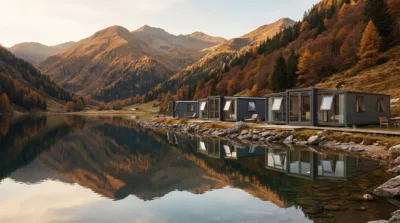
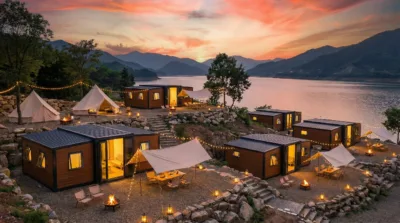
Exterior finishes can be adapted to local materials, helping the structure disappear into the landscape while still standing out online.
Coastal and Scenic Destinations
By the sea, buildings need to handle wind, humidity, and salt — but they also need to face the view.
Expandable container units naturally support large openings and shaded terraces, which are essential for ocean-facing projects. Their transport-friendly nature also simplifies logistics in remote coastal areas.
Rural and Emerging Tourism Areas
In countryside locations, flexibility is everything.
Many operators don’t want to invest all at once. They want to test demand, build gradually, and expand only when occupancy justifies it.
Modular container hotels allow exactly that — a few units now, more later — without redesigning the entire site or shutting down operations.
A Smarter Cost Structure for Small Investors
For small commercial investors, the appeal of modular hotels isn’t just design or speed.
It’s risk control.
Traditional projects often look affordable at the start and expensive at the end. Modular container solutions tend to do the opposite — they feel clear early, and stay that way.
With more predictable permanent container housing costs, investors can model returns more accurately, plan phased investments, and reach breakeven sooner.
That’s why expandable container solutions are increasingly used not just for creative projects, but for serious, long-term tourism assets.
Final Thoughts: Don’t Miss the Window You Worked So Hard to Find
In tourism, timing matters as much as location.
A great concept that opens late is just another building.
A distinctive space that opens on time becomes a destination.
For homestay owners and small tourism investors, modular container hotels offer a way to move faster without sacrificing identity — and to build something memorable without carrying unnecessary risk.
For many operators, that combination is exactly what turns an idea into a viable business.
Have questions about how expandable container hotels can fit your project? Feel free to contact us(https://gsmobilehouse.com/contact/) — we’re always happy to chat about your vision and help you find the best solution for your space.