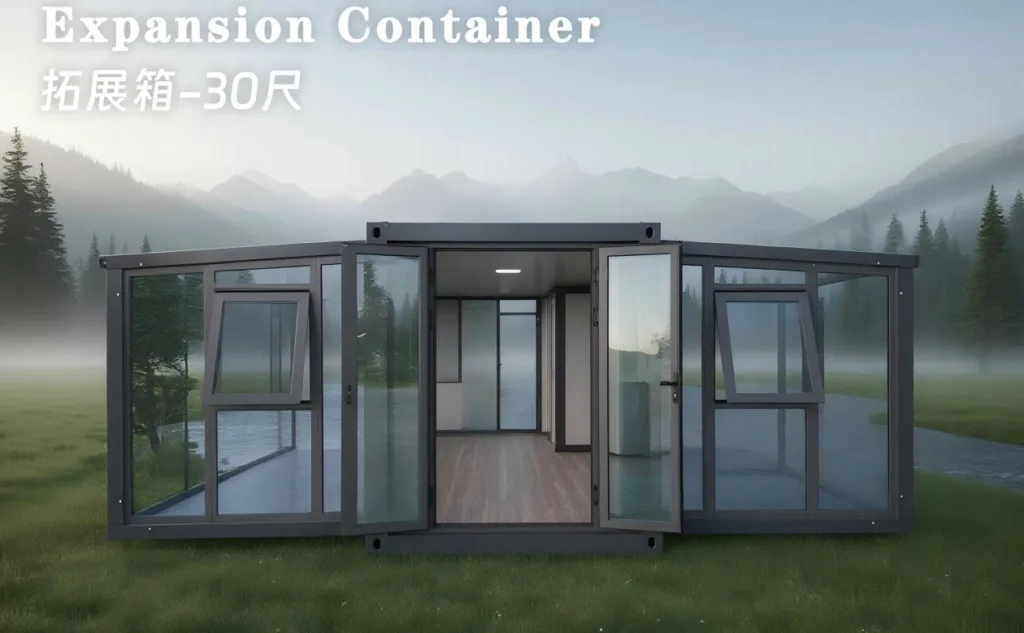
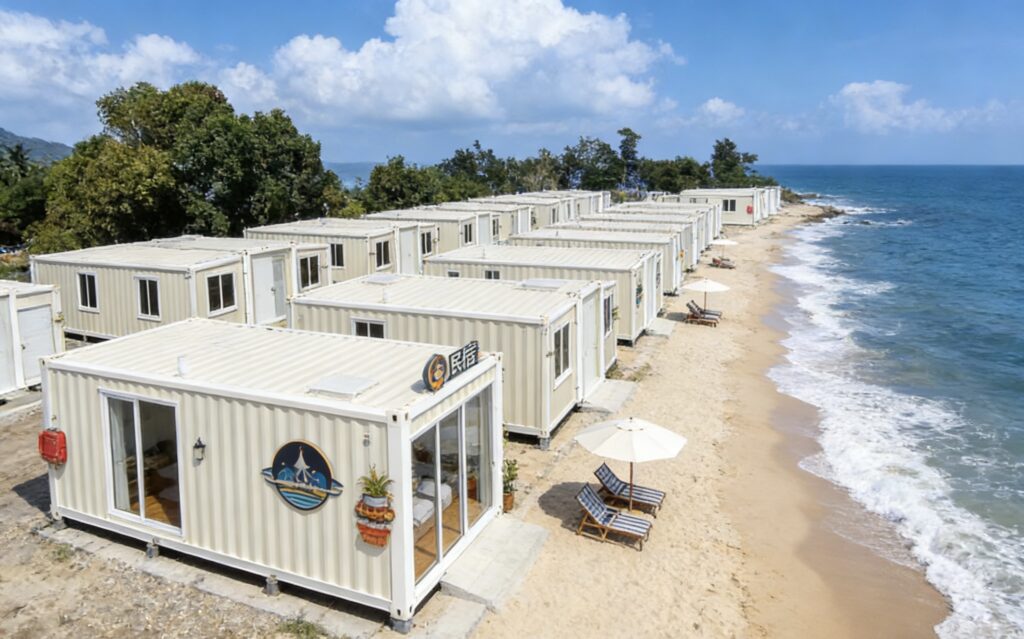
From Backyard Living to Mining Camps — Real Uses That Go Far Beyond “Temporary Housing”
For a long time, “container house” meant one thing: a temporary box placed on a job site.
That image still lingers.
But in practice, expandable container systems are being used very differently today.
They’re showing up in backyards, tourist resorts, rural land plots, mining sites, and post-disaster recovery zones. Not as short-term fixes, but as structured, usable spaces that stay in service for years.
So the real question is no longer “Is it temporary?”
It’s “Where does this system actually make sense?”
This guide looks at how expandable container house applications work across residential, commercial, project-based, and emergency scenarios — and why the expandable structure itself changes how space can be delivered.
Residential Applications: Practical Living Without Long Build Cycles
Urban Compact Living
In dense cities, adding space the traditional way usually means months of approvals, contractors coming and going, and costs that rarely stay fixed.
Expandable container units approach the problem differently.
The structural work is completed in a factory. On site, the unit is placed, unfolded, and connected. What would normally take months can often be reduced to a short installation window.
Once expanded, the space functions like a standard small residence — insulated walls, finished interior surfaces, integrated kitchen and bathroom systems. It doesn’t rely on the “temporary cabin” logic many people still associate with containers.
For compact urban lots or infill housing, the appeal isn’t novelty. It’s predictability.
Backyard ADU (Accessory Dwelling Unit)
Backyard ADUs have become common in many cities, especially where housing shortages push families to use land more efficiently.
The conventional route involves foundations, framing crews, inspections, and long timelines. Expandable container ADUs shift much of that work off-site.
The frame, walls, and enclosure are manufactured in advance. On delivery, the unit expands into its full footprint before utilities are connected.
Because the structure is engineered steel, it can meet local structural requirements when properly certified and installed. And if land-use rules or family needs change later, relocation remains possible.
Among modular container house applications, ADUs have quietly become one of the most consistent use cases — not because they are flashy, but because they solve a very ordinary, very common need.
Rural & Remote Self-Build Housing
Building in remote areas often sounds simpler than it is. Materials travel long distances. Skilled labor is limited. Weather interrupts schedules.
Expandable container houses reduce how much has to happen on site. Most structural fabrication is already complete before delivery.
That doesn’t remove every challenge, but it shortens the most uncertain phase of construction.
With appropriate insulation and exterior protection, these units are being used in farmland, mountainous regions, and coastal environments. In those settings, reliability tends to matter more than architectural statement.
The advantage here is not that the system is “modern.”
It’s that the process is controlled.
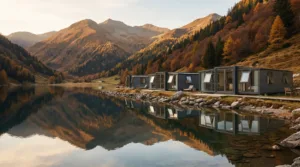
Commercial & Tourism Applications: Space That Can Grow With the Project
The expandable mechanism is built into the load-bearing structure. That detail is important.
It means expansion is not an afterthought or a temporary add-on. The unit is designed to unfold without weakening its frame. Because of that, scaling up later doesn’t require tearing down and rebuilding.
Boutique Lodges & Eco-Stays
Tourism projects rarely move at a relaxed pace. Investors want to open early, test demand, and adjust capacity over time.
Expandable units allow operators to start small — a few rooms placed in clusters — and add more as bookings increase.
Manufacturing happens off-site, so the on-location build period is shorter. For coastal or high-humidity regions, appropriate coatings and structural protection are specified at the factory stage.
The model works less like traditional construction and more like phased assembly.
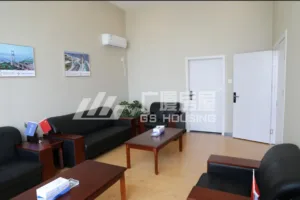
Startup Offices & Remote Project Offices
Project-based industries rarely stay in one place.
Infrastructure teams, renewable energy developers, and engineering contractors often move from site to site. Office space needs to appear quickly and disappear just as efficiently.
Expandable container offices are transported compactly and expanded after placement. When a project ends, the unit can be folded again and relocated.
This repeat-use capability is one reason modular container house applications continue to expand in project-driven sectors. The value isn’t just speed — it’s reusability.
Retail, Cafés & Temporary Commercial Spaces
Short-term commercial spaces benefit from flexibility more than permanence.
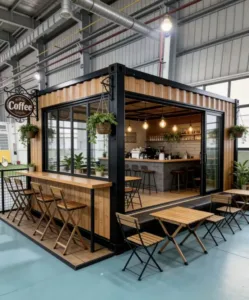
Expandable units are used for coffee shops, seasonal retail stores, exhibition booths, and event facilities. Their transport size simplifies logistics, while the expanded layout allows for practical interior planning.
For businesses testing a new neighborhood or participating in temporary events, this format reduces long-term commitment while maintaining structural stability.
It’s a practical compromise between pop-up tents and permanent construction.
Industrial & Project Applications: Built for Demanding Conditions
In remote or industrial environments, performance expectations shift. Durability, transport efficiency, and quick assembly matter more than architectural expression.
Mining & Construction Worker Accommodation
Mining and infrastructure projects often operate far from established cities.
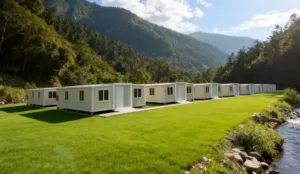
Expandable housing units are delivered in compact form and configured on site into single or multi-level layouts. Anti-corrosion treatments and reinforced structural framing are common specifications in these environments.
Because the system is designed to fold and unfold repeatedly, units can move between project phases instead of being discarded.
Over time, that mobility becomes part of the financial logic.
Disaster Relief & Transitional Resettlement
After major natural disasters, the immediate goal is shelter that is fast but still safe.
Expandable container houses are transported efficiently and deployed quickly. Compared with tent-based systems, they provide insulated, enclosed space with stronger structural resistance to wind and weather.
In recovery phases, some of these units transition into schools, clinics, or administrative spaces.
In that context, the expandable structure supports not just emergency response, but gradual rebuilding.
Why the Expandable Structure Makes a Difference
The expandable system is integrated into the structural frame itself.
When unfolded, the unit doesn’t rely on temporary bracing or separate extensions. The load-bearing logic remains continuous. That detail separates engineered expandable systems from improvised modifications.
Compared with conventional on-site construction, this approach typically offers:
Shorter installation periods
Controlled factory production quality
Reduced material waste
More predictable budgeting
Long service life through steel framing
Manufacturers such as GS Housing have worked across residential, commercial, and project-based contexts, refining factory-built expandable systems that align with international compliance standards.
The key point isn’t that these units replace all construction.
It’s that they offer a different construction sequence.
Choosing the Right Expandable Container Solution
Before selecting a system, it helps to clarify:
How much space is actually required?
Is the use residential, commercial, or project-based?
What local codes apply?
What climate conditions need to be addressed?
Is the need temporary, long-term, or phased?
Expandable container house applications vary widely depending on context. Matching configuration and specification to real-world conditions is more important than choosing the most feature-rich model.
If you need help evaluating the right configuration, explore our project consultation page.
Final Thoughts
Expandable container houses are no longer limited to short-term site offices.
They are being used as:
Urban infill homes
Backyard ADUs
Rural residences
Tourism lodges
Mobile offices
Retail and event spaces
Worker accommodation
Disaster recovery housing
What connects these applications is not appearance, but process.
Expandable systems change how space is delivered — shifting more work into controlled factory environments and reducing uncertainty on site.
In many modern projects, that shift alone makes a meaningful difference.