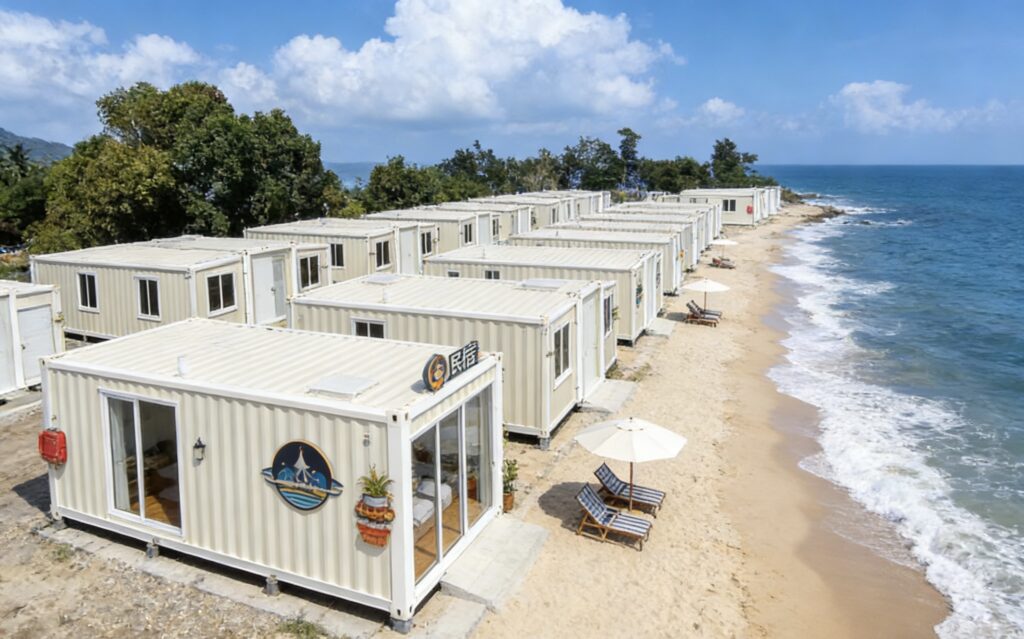
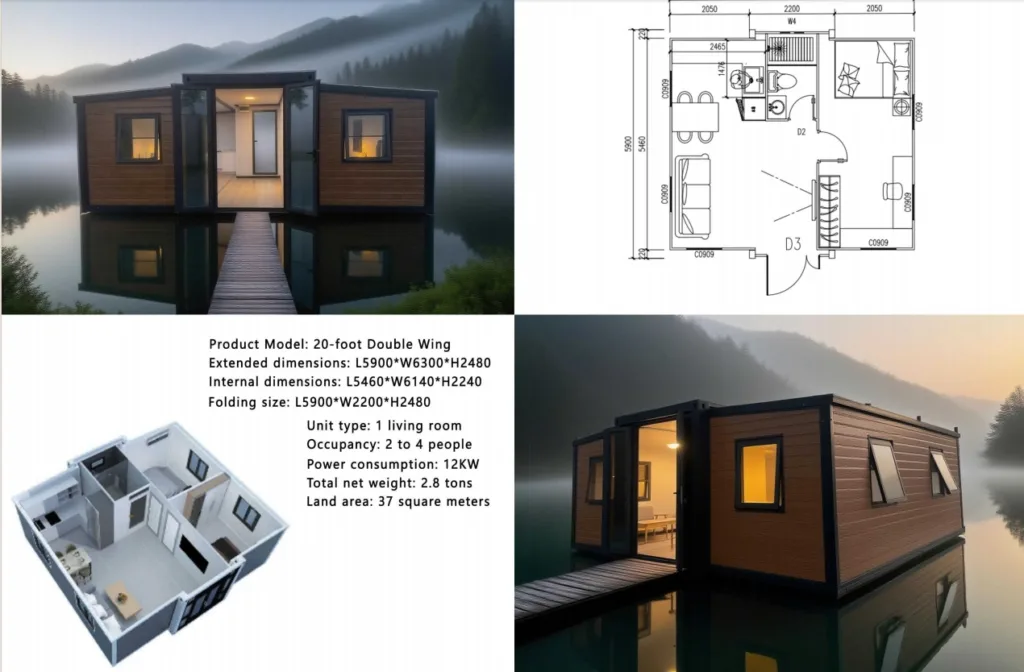
Step onto a desert site at noon and you feel it immediately. The heat doesn’t just warm the air — it pushes against you. Light reflects off the ground. Sand moves with every shift of wind. And if you walk into a poorly designed desert container home, it can feel like stepping inside a sealed metal oven.
For developers across the Middle East, inland Australia, and the American Southwest, building in the desert isn’t just about placing an expandable container house on a remote plot. It’s about designing something that survives extreme climate stress year after year. Desert climate expands container housing solutions far beyond standard modular builds. Heat, UV radiation, dust infiltration, and dramatic temperature swings rewrite the rules entirely.
Whether you’re planning a desert tourism camp, a mining accommodation site, an engineering base, or a private off-grid eco-friendly home, one thing is clear: desert conditions don’t forgive weak design.
Let’s talk about what actually matters.
The Real Challenges Behind Desert Construction
1.Heat That Doesn’t Turn Off
Daytime temperatures in desert regions regularly exceed 45°C (113°F). Steel structures absorb solar radiation continuously. Without proper thermal protection, a container unit stores heat throughout the day and releases it slowly into the night.
The result?
Cooling systems running nonstop
Energy costs climbing
Equipment wearing out faster
Living and working spaces becoming uncomfortable
Then nighttime arrives, and temperatures drop sharply. Materials expand under intense daytime heat and contract rapidly after sunset. Over time, rigid joints weaken, seals loosen, and micro-cracks develop. It’s not dramatic at first. But desert fatigue builds quietly.
2.UV Radiation That Breaks Down Materials
Desert sunlight is relentless. Standard exterior coatings fade within months. Lower-grade paint begins to peel. Plastic trims become brittle and fragile.
A container house designed for temperate climates simply won’t handle long-term UV exposure. Once protective coatings fail, structural components are exposed to accelerated aging. Maintenance costs increase. Lifespan decreases.
UV resistance isn’t cosmetic. It’s structural insurance.
3.Sand Intrusion: The Silent Disruptor
Desert dust is extremely fine. It moves easily and settles everywhere.
If seals aren’t engineered properly, sand will enter through door frames, window gaps, vents, and connection joints. For tourism operators, this means guest discomfort. For mining and engineering sites, it affects equipment performance. For off-grid living, indoor air quality becomes an ongoing issue.
Dust control isn’t an upgrade feature. In desert container housing, it’s a baseline requirement.
4.Environmental Responsibility in Harsh Regions
Modern desert projects often operate under strict environmental regulations. Water efficiency, energy consumption, and construction waste management are monitored closely.
This is where modular eco-friendly home systems become especially relevant. Factory-built expandable units reduce on-site material waste. Integrated water and electrical systems improve operational efficiency. Modular scalability prevents unnecessary demolition when expansion is required.
Sustainable design and desert durability now go hand in hand.
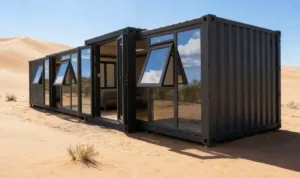
Why Expandable Container Houses Work in Desert Climates
A well-engineered expandable container house addresses many of these climate-specific challenges at once.
First, logistics. Remote desert locations are expensive and difficult to build in. Expandable units ship compactly and unfold on-site in days. This reduces heavy labor exposure to extreme conditions and minimizes construction timelines.
Second, flexibility. Mining camps grow. Tourism resorts expand. Engineering bases shift phases. Expandable modular systems allow additional units to be connected without disrupting existing structures.
Third, factory-level precision. Controlled production environments ensure tighter sealing, consistent insulation layers, and higher structural consistency. In desert climates, small design flaws quickly become major operational problems. Precision reduces that risk.
But here’s the critical point: not every container home is engineered for desert climate performance.
A Common Mistake: Using Coastal Specs in Desert Projects
Developers with coastal experience often assume similar modular standards apply inland. They don’t.
Coastal container homes prioritize:
Moisture resistance
Salt corrosion protection
Wind load performance
Desert-ready expandable container homes prioritize:
Heat reflection
UV resistance
Dust sealing
Structural flexibility for thermal expansion
Reusing coastal specifications in a desert environment often leads to overheating issues, premature material fatigue, and persistent dust infiltration.
Desert design requires its own engineering logic.
A Practical Checklist for Desert-Ready Container Housing
If you’re evaluating options for a desert container home, here are five essential elements to confirm:
1.Double-Layer Ventilated Roof with Reflective Coating
An air gap between roof layers reduces direct heat transfer. Reflective coatings deflect solar radiation. Together, they significantly reduce internal temperature buildup and cooling demand.
2.UV-Resistant Polyester Exterior with Reinforced Aluminum Frame
High-grade UV coatings prevent fading and cracking. A strengthened aluminum structural frame improves durability under constant heat exposure and thermal stress.
3.Integrated Water and Electrical Systems
Pre-installed utilities simplify deployment in remote desert locations and reduce coordination errors during installation.
4.Double-Sealed Doors and Windows with Dust Filters
High-performance rubber sealing strips combined with fine dust mesh filters help block sand intrusion and protect indoor air quality.
5.Flexible Structural Connections
Desert climates create dramatic expansion and contraction cycles. Elastic joint systems allow subtle structural movement without cracking panels or weakening seals.
Each of these elements directly addresses a real desert condition — not a theoretical one.
Engineering with Desert Reality in Mind
Some manufacturers treat desert performance as an upgrade. It shouldn’t be.
In desert-focused projects, structural ventilation, reflective insulation, UV-resistant finishes, reinforced framing, dust-sealed openings, and adaptable joint systems need to be considered from the beginning of the design phase.
Companies like GShousing approach desert expandable container housing this way — integrating climate-specific solutions early rather than retrofitting them later. The result is not just faster installation, but more stable long-term performance in extreme regions.
In harsh climates, design decisions made at the engineering table matter more than anything added afterward.
Final Thoughts: The Desert Tests Everything
A desert container home is not simply a modular unit placed on sand.
It is a system built to manage heat, deflect UV radiation, resist dust infiltration, and adapt to daily thermal stress — while operating efficiently in remote environments.
When an expandable container house is engineered with climate-first thinking, it becomes one of the most practical and scalable housing solutions for desert tourism camps, mining operations, engineering bases, and private off-grid living.
The desert doesn’t reward shortcuts.
It rewards preparation.
And in extreme climates, long-term performance always begins with thoughtful design.