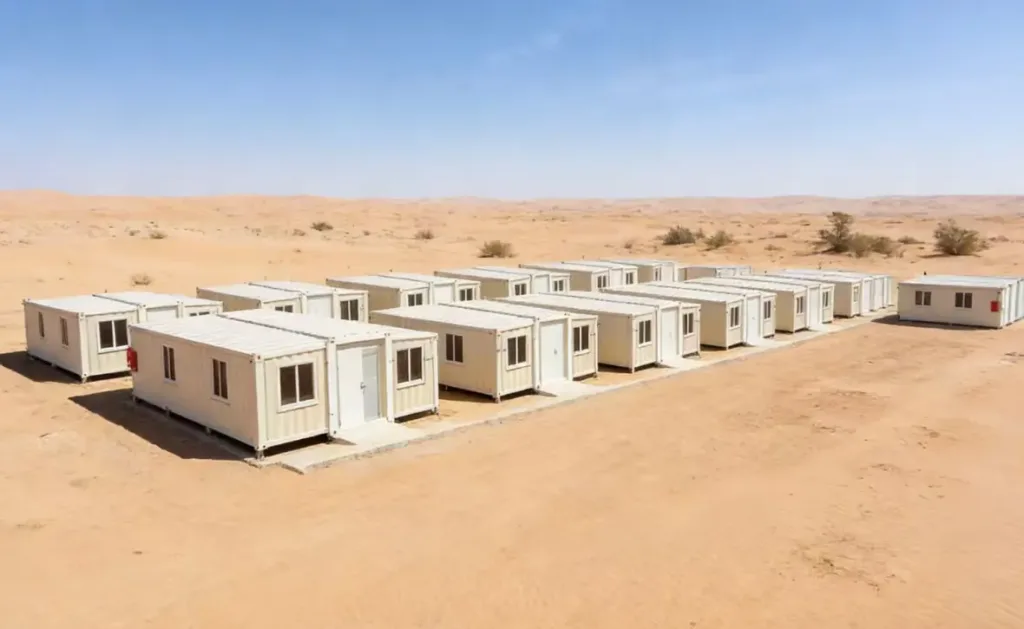
Expandable container house design sounds simple — until you try to live or work inside one.
On paper, it’s efficient. Flexible. Fast to deploy.
In reality? Space runs out quickly. Light feels limited. Ventilation becomes an afterthought. And once the box arrives on site, fixing design mistakes gets expensive.
At GS Housing(https://gsmobilehouse.com/), we’ve designed and built hundreds of expandable units for mining camps, resorts, and remote housing projects around the world. Over time, we’ve learned one clear truth:
the design phase is where everything is won or lost.
If you’re planning a custom expandable container design(https://gsmobilehouse.com/container-house/) for a mining camp, resort project, temporary medical facility, or even a private home, this guide walks through what actually matters — layout strategy, structure details, climate adaptation, and one real project example that ties it all together.
Where Most Expandable Container Designs Go Wrong
Let’s start with reality.
Many early design mistakes don’t come from bad intentions. They come from optimism.
You look at a floor plan and think:
“This should be enough space.”
“We can adjust furniture later.”
“It’s temporary anyway.”
But once people move in, things feel different.
The corridor is narrower than expected.
The bathroom door blocks the storage cabinet.
Heat builds up in the afternoon because airflow wasn’t considered.
The unit works — but it doesn’t feel comfortable.
Common issues we see in expandable container house design(https://gsmobilehouse.com/container-house/):
Overestimating usable space after insulation and wiring
Not planning natural light early enough
Poor airflow in hot or humid climates
Interior layouts that look good on drawings but fail in daily use
Stacking designs without considering structural load balance
Expandable units give flexibility.
But flexibility only works if the structure and layout are thought through from the beginning.
Step 1: Start With the Right Layout Strategy
The most common expandable structure today is the double-wing expandable container house
(https://gsmobilehouse.com/40ft-expandable-container-house-cloned/). Once unfolded, it nearly doubles the interior width.
But the real design value shows up when multiple units are combined.
L-Shape Layout
L-shaped configurations work well for:
Small resort villas
Private homes
Medical clinics
Compact site offices
They create natural separation between sleeping and living zones.
They also help control wind exposure in open landscapes.
U-Shape Layout
U-shaped expandable container house design is popular in:
Mining camps
Workforce dormitories
Community-style housing
It creates a semi-private courtyard.
That space becomes more important than many people expect. It’s where people gather, eat, cool down, or simply get fresh air after long shifts.
Layout is not just geometry. It’s daily behavior planning.
Step 2: Structural Design Is Comfort Insurance
Structure decisions are invisible once finished — but you feel them every day.
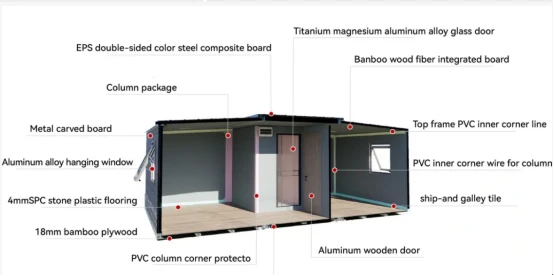
Insulation & Heat Control
If you’re placing units in tropical or desert climates, insulation isn’t optional.
Roof heat is usually the biggest issue. Double-layer roofing systems, reflective coatings, and proper air gaps reduce heat transfer significantly.
Without that? The AC runs constantly. Energy bills rise. Interiors unstable.
Ventilation & Airflow
Windows alone don’t solve airflow.
Design needs:
Cross-ventilation planning
Proper window placement
Door sealing systems
Optional dust filters for harsh environments
Air movement affects comfort more than square footage.
Stacking & Load Distribution
expandable container house units can be stacked — but stacking is not just placing one box over another.
You need reinforced connection points and balanced load transfer.
Skipping this stage saves time initially — but costs much more later.
A Real Project Example: Vanuatu Mining Camp
Let’s move from theory to practice.
In a mining camp project in Vanuatu
(https://gsmobilehouse.com/projects/vanuatu-expandable-container-camp/), the client needed something deployable fast, durable in tropical conditions, and comfortable enough for long-term staff accommodation.
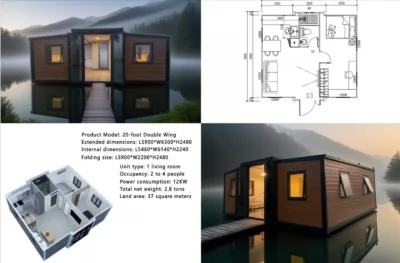
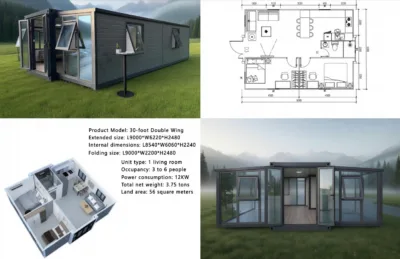
At GS Housing, we combined 20ft expandable container house
(https://gsmobilehouse.com/20ft-expandable-container-house-your-flexible-space-solution/) and 30ft expandable container house
(https://gsmobilehouse.com/gs-housing-30ft-dual-wing-expandable-containe
r-house/) double-wing expandable units to build a compact but fully functional camp.
The 20ft Units – Daily Living Done Right
The 20ft expandable units were designed for real daily life — not just sleeping space.
Each unit included:
A separated wet and dry bathroom (no permanently soaked floors)
A compact but efficient kitchen that allowed proper cooking
A dining space that could seat eight people comfortably
That layout came from experience.
In remote projects, small design oversights quickly turn into daily frustration. When kitchens are too tight, people eat outside. When bathrooms stay wet, maintenance increases. When dining areas are cramped, morale drops.
By integrating these elements into one efficient, compact flow, the living experience improved significantly — even in a remote mining environment.
The 30ft Units – The Project’s Nerve Center
The 30ft expandable container houses served a completely different role.
They became the operational core of the camp.
Based on real construction-site workflow needs, the design included:
A dedicated project manager’s office
Open workstations for coordination
A small meeting room for daily briefings
It wasn’t just office space. It was where decisions happened.
Keeping management organized directly affected site efficiency.
Both sizes were delivered with integrated electrical systems, insulation solutions, and internal layout customization completed before shipment. On-site work was reduced to placement and utility connection.
That’s what good custom expandable container design looks like — practical, experience-driven, and tailored to how people actually use space.
Customization That Makes a Difference
One of the biggest strengths of expandable container house design is controlled customization.
At GS Housing, our typical custom solutions include:
Interior partition adjustments
Pre-installed bathroom modules
External wall color selection
Integrated electrical systems
Climate-adapted structural reinforcement
The key is not “adding features.”
It’s aligning design decisions with how the building will actually be used.
Whether for resort camps, mining dormitories, temporary hospitals, or private residences, the goal stays the same:
Make the space work for people — not the other way around.
Final Thoughts: Design First, Regret Less
Expandable container houses are not just quick-build structures anymore.
They are long-term assets in many industries.
But design shortcuts show up quickly in daily use.
Good expandable container house design balances:
Smart layout planning
Climate-conscious structure
Real-life workflow understanding
Thoughtful customization
When those pieces align, the result isn’t just efficient.
It feels intentional.
And that difference is noticeable from day one.
If you’re planning a remote or modular project and want a design built for real life,
GS Housing(https://gsmobilehouse.com/contact/) can help you create a layout and structure that fits your site, your team, and your long-term needs.