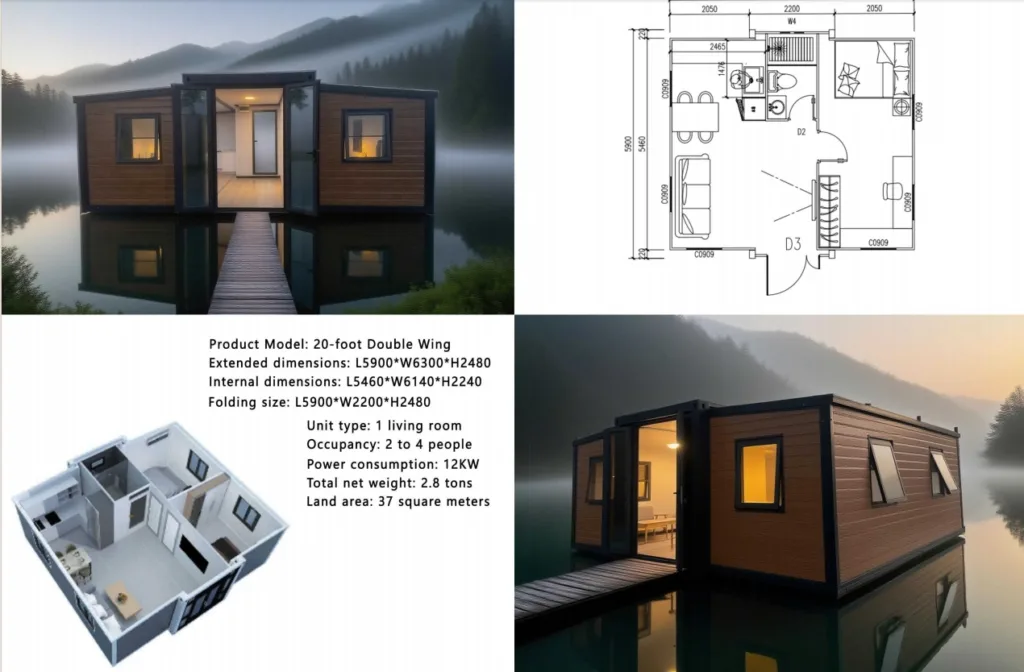
If you’ve never watched an expandable container house being deployed on site, it can feel a bit counter-intuitive.
A steel box arrives on a truck. A few hours later, it’s a fully usable building with real rooms, real insulation, and real structural rigidity.
Many first-time buyers assume there must be complicated machinery involved, or that something this fast must sacrifice stability.
In reality, the opposite is true. The simplicity you see on site is the result of complexity already solved inside the factory.
The Basic Principle Behind an Expandable Container House
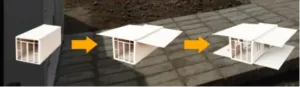
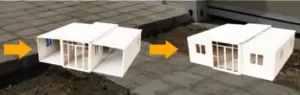
An expandable container house is not “assembled” in the traditional sense.
It’s better to think of it as a pre-built structure that temporarily compresses itself for transport.
Like a carefully designed piece of luggage, everything already has its place:
Structural frame → permanently welded and load-bearing
Walls, insulation, and finishes → pre-installed
Electrical pathways → integrated before delivery
Expansion sections → engineered to slide out without altering structural logic
So when the unit expands, you are not building — you are revealing space that was already constructed.
That’s why the quality depends far more on manufacturing precision than on-site labor.
How the Expansion Process Actually Happens
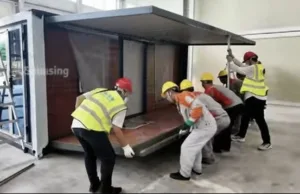
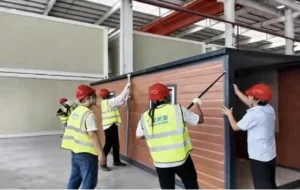
From a site perspective, the process is surprisingly calm. No cutting, no welding, no improvisation.
- Set the Unit in Position
The container is placed on simple supports or a light foundation. Because the structural system is self-contained, it doesn’t rely on heavy civil work. - Release Transport Fasteners
During shipping, the expandable portions are secured to prevent movement. These are removed to allow controlled deployment. - Slide-Out Expansion
The side modules extend horizontally along pre-aligned guides. The movement range is physically limited by the structure itself — it cannot overextend. - Automatic Alignment
Floors, walls, and roof sections meet exactly where they were designed to meet. No site adjustment is needed. - Engage Structural Locks
Once opened, locking nodes convert the unit from “transport mode” into “building mode.”
This entire process is closer to unfolding engineered equipment than constructing real estate.
After Opening, How Is It Locked and Sealed?
This is the moment where people expect weakness — but it’s actually where the building becomes most rigid.
Structural Locking
Expandable container houses use fixed mechanical locking points designed to transfer loads back into the primary steel frame:
Steel-to-steel compression interfaces
Bolted reinforcement at expansion joints
Continuous load path through the galvanized skeleton
Anti-shift geometry preventing movement after locking
Once engaged, the expanded sections behave as part of one unified structure, not as add-ons.
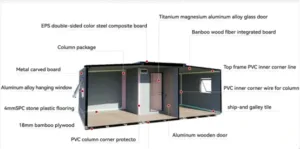
Weather Sealing
To handle rain, wind, and temperature change, expansion joints include layered sealing strategies:
Overlapping panel geometry to shed water naturally
Industrial sealing strips protected inside joint cavities
Compression seals at roof transitions
Designed drainage paths rather than exposed sealant lines
These details are installed during production — not guessed at on site — which is why performance is consistent across very different environments.
Why Manufacturing Matters More Than On-Site Assembly
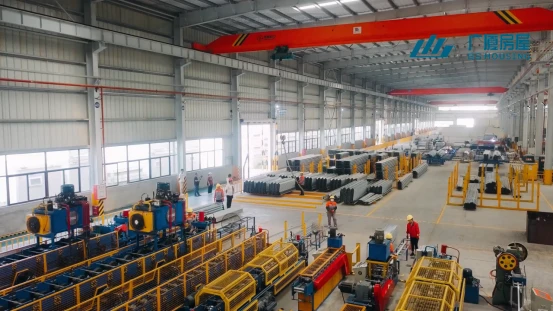
The real strength of an expandable container house comes from where it is made, not where it is installed.
Because the structure must both travel and perform as a building, manufacturers engineer it more like industrial equipment than traditional construction. Frame tolerances, corrosion protection, and modular alignment are all decided long before delivery.
This factory-first approach is central to how companies like gshousing design their systems — using fully prefabricated components, hot-dip galvanized steel structures, and repeatable production processes so that deployment on remote sites remains predictable rather than dependent on local construction conditions.
In practice, this means the building arriving at site is already 90% complete — the expansion simply makes it usable.
Is an Expandable Container House Structurally Stable?
Yes — because the frame is designed to perform in both states: compact and expanded.
A properly engineered system includes:
Galvanized primary steel frame resisting transport stress and long-term corrosion
Reinforced corner posts designed for lifting, shipping, and occupancy loads
Structural continuity from base to roof after deployment
Expansion mechanics that do not interrupt load transfer
Once locked open, the building functions like any modular steel structure used in industrial or infrastructure environments.
It doesn’t behave like something temporary. It behaves like something pre-engineered.
Understanding Expandable Container House Safety in Real Use
Safety comes from reducing variables.
Traditional construction quality can vary depending on crew, weather, and local interpretation of drawings. Expandable modular buildings shift that risk into a controlled production setting where each unit follows the same manufacturing logic.
That consistency is why they are commonly used for:
Labor accommodation on large infrastructure projects
Remote energy or mining operations
Temporary administrative facilities
Rapid-response housing deployments
Government or NGO support buildings
These are environments where reliability matters far more than architectural novelty.
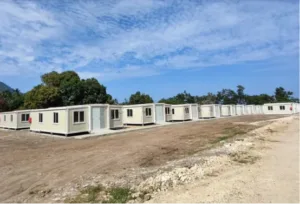
Does an Expandable Container House Require Much Maintenance?
Despite having a moving phase during installation, these buildings do not require ongoing mechanical servicing.
After deployment, maintenance looks very similar to any steel modular building.
Routine checks typically include:
Inspecting structural locking points periodically
Ensuring joint seals remain intact over time
Keeping roof drainage paths clear
Cleaning exterior surfaces when exposed to harsh environments
There are no motors, no active hydraulic systems, and no components that require continuous adjustment. The expansion is a one-time action, not a repeated operation.
So expandable container house maintenance is best understood as building care, not machinery maintenance.
Why This System Continues Gaining Adoption Globally
Expandable modular construction works because it solves a logistical problem rather than trying to replace all traditional buildings.
It allows project teams to transport high-quality built space efficiently, then deploy it quickly without sacrificing structural performance.
By concentrating precision in the factory and simplifying work on site, it reduces:
Construction timelines
Dependence on skilled local labor
Material waste and rework
Transportation inefficiency
Uncertainty in remote project delivery
That combination makes it especially effective for projects where time, predictability, and repeatability matter more than customization during construction.
The Key Idea to Remember
An expandable container house is not a folding structure trying to act like a building.
It is a building — engineered in advance — that briefly changes shape so it can travel efficiently.
Once opened and locked, it performs exactly as it was designed to from the start.