Large-scale camp projects look straightforward on paper.
Build accommodation. Install utilities. House the workforce. Start operations.
But anyone who has managed one knows it rarely unfolds that simply.
In mining, oil & gas, and infrastructure projects, workforce camps often become one of the most sensitive parts of the entire development.
Delays in camp delivery can stall an entire project.
Overbuilt facilities can lock up capital for years.
Poor living conditions quietly affect productivity.
So for decision-makers, the real issue is not just how to build a camp.
It is how to maximize ROI in camp projects while keeping timelines tight, costs controlled, and long-term value intact.
This is where expandable container homes for camps deliver structured financial and operational advantages.
The Real Challenges in Large-Scale Camp Projects
Before looking at solutions, it helps to be honest about the pressure points most projects face.
Budget Constraints and Capital Lock-In
Camp construction requires significant upfront investment — land preparation, foundations, structural work, utilities, and internal fit-out.
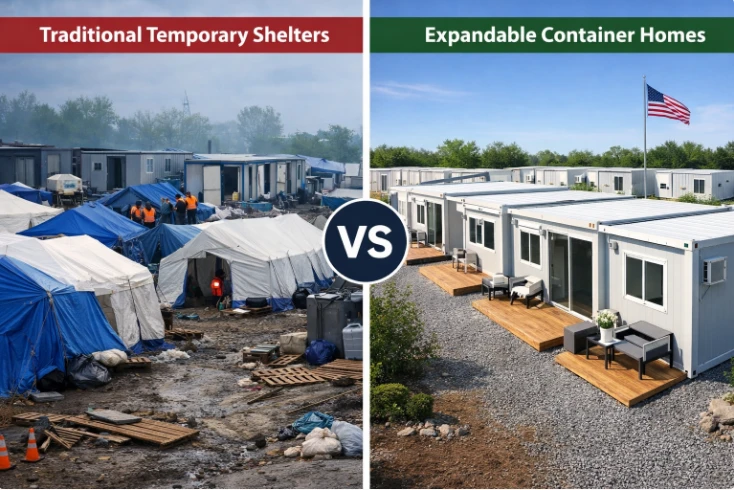
With traditional construction, once the camp is built, it stays where it is.
If the project ends in three years, the buildings usually stay too.
For short- to mid-term contracts, that creates a capital problem. Money is tied to assets that may not generate value after the project closes.
In many cases, these facilities cannot be easily repurposed or relocated, which further limits capital recovery.
That’s where ROI starts to shrink.
Construction Timelines
In most large-scale developments, accommodation must be ready before or at least alongside operations.
If workforce housing is delayed:
Project startup is delayed
Revenue generation is pushed back
In some cases, penalties apply
Even a few weeks can make a difference.
Speed is not just about convenience — it affects cash flow.
Harsh Environmental Conditions
Most big camps are in remote, harsh areas — deserts, mining areas, tropical places or humid coasts. These places have extreme heat, heavy rain and serious corrosion. Housing has to hold up in these conditions, or maintenance costs will keep rising every year. A building that seems cheap at first will end up costing more with non-stop repairs. After a few years, small fixes and high energy use will push operating costs far over the original plan.
Workforce Satisfaction and Productivity
On-site living quality matters more than people realize. Good ventilation, layout, insulation and privacy help keep workers stable and willing to stay. In a camp with hundreds of workers, small comfort problems get worse quickly. When workers live on site for months at a time, good housing is key to keeping operations running smoothly.
Why Expandable Container Homes for Camps Are Gaining Attention
Expandable container homes are not a new concept.
What has changed is how they are used.
Instead of being seen as temporary shelters, modern expandable systems are now designed for structured, multi-year camp deployment.
They offer something traditional buildings cannot: mobility combined with speed.
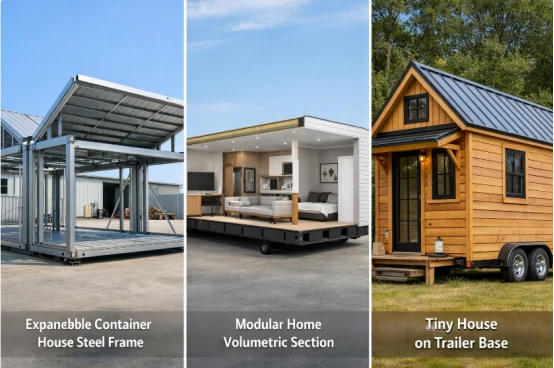
While modular housing offers fixed construction, 20ft expandable container house units deliver unmatched mobility and reusability for project-based camps.
For companies focused on maximizing ROI in camp projects, that flexibility makes a real difference.
Construction Speed: Getting Operational Faster
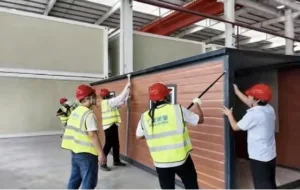
One of the strongest advantages of expandable container homes for camps is how quickly they can be deployed.
Units are manufactured in factories under controlled conditions, delivered in folded format, and installed on-site with minimal groundwork.
Compared to conventional construction:
Site preparation is lighter
Weather delays are reduced
Installation time is significantly shorter
In practical terms, this can mean weeks saved.
And when a 500-person camp becomes operational earlier, production can start earlier too.
That directly improves the ROI of expandable container homes.
Time saved often translates into revenue preserved.
Flexibility and Scalability
Large projects rarely stay fixed.
Workforce numbers increase.
New phases begin.
Additional service areas become necessary.
Expandable systems make it possible to add accommodation blocks or functional areas without major reconstruction.
Instead of overbuilding in the beginning “just in case,” capacity can grow with actual demand.
That phased approach protects capital and reduces unnecessary upfront investment.
For project managers balancing budgets across multiple cost centers, this reduces financial exposure during early-stage deployment.
Mobility: Reducing End-of-Project Waste
This is one of the biggest financial differences.
When a mining or infrastructure project ends after 24–36 months, traditional camps often remain in place or require costly dismantling.
In some regions, environmental restoration requirements can further increase post-project expenses for fixed structures.
Expandable units, however, can be folded, transported, and reinstalled elsewhere.
For contractors managing multiple projects across regions, this matters.
Instead of writing off accommodation assets at project completion, they can be redeployed to the next site.
Over several cycles, this reuse significantly improves the overall ROI of expandable container homes.
Long-Term Return: Maintenance and Energy Performance
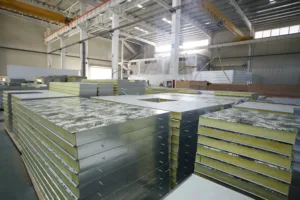
Beyond deployment speed, long-term operating costs also affect returns.
Modern expandable container housing systems typically use:
Galvanized steel frames
Insulated wall panels
Efficient window and door systems
Integrated drainage designs
These features reduce corrosion issues, structural wear, and excessive cooling or heating costs.
Well-planned layouts also improve space utilization, allowing comfortable accommodation without wasting footprint.
Over time, lower maintenance frequency and more stable energy consumption help keep operating budgets predictable.
How to Evaluate the ROI of Expandable Container Homes
For decision-makers, ROI should be assessed across several dimensions:
Initial Investment
Manufacturing
Transportation
Site preparation
Operating Costs
Maintenance
Utilities
Energy use
Time Advantage
Earlier operational readiness
Reduced delay-related losses
Reuse Potential
Number of future deployments
Transportation efficiency due to foldable design
Residual Value
Resale potential after project completion
When viewed over multiple project cycles rather than a single contract period, expandable systems often present a stronger financial case than permanent alternatives.
The difference becomes clearer over time.
Strategic Perspective: Aligning Housing with Project Reality
Camp housing is often treated as a necessary cost.
But in large-scale mining, oil & gas, and infrastructure developments, it is also a capital decision.
Dual-wing expandable container house units align more naturally with project-based industries where mobility, speed, and adaptability matter.
They reduce exposure, increase flexibility, and preserve asset value across locations.
Conclusion: Rethinking Camp Investment Strategy
In large-scale camp developments, efficiency and ROI are closely connected.
Shorter construction timelines support earlier revenue.
Flexible expansion reduces unnecessary capital commitment.
When camps can move from one project site to another, long-term asset value is preserved rather than written off.
For leaders focused on maximizing ROI in camp projects, expandable container housing is not just an alternative building method.
It is a practical way to structure project infrastructure around mobility, lifecycle value, and financial discipline.