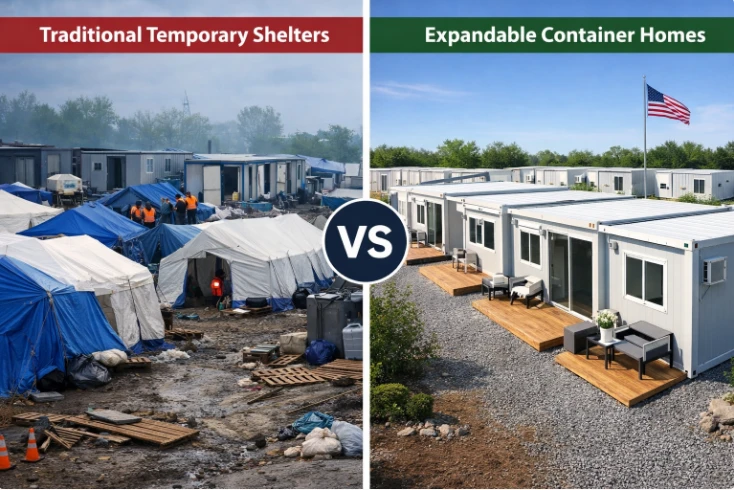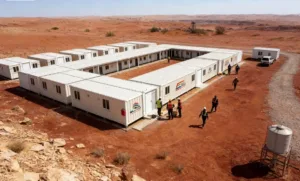
If you’re building worker camps in remote mining sites, rushing temporary housing, or launching infrastructure projects across South America, you care most about one thing: expandable container house cost that’s clear and reliable.
Traditional construction brings delays, unpredictable labor costs, endless site work, and budgets that spiral out of control long before the first wall goes upSpeed and cost certainty aren’t just nice-to-have — they’re make-or-break for your project.
And the first question on every buyer’s mind is always the same:
How much does an expandable container house really cost in South America?
No vague estimates. No hidden fees. No generic numbers that fall apart when you ask for details.
This guide gives you the real expandable container house cost in South America for 2026 — not rough guesses, but actual market numbers you can take to the bank. We break down the factors that move the needle on your final bill, and what you can actually expect to pay for a ready-to-use space.
What Is an Expandable Container House?

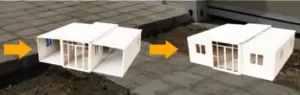
An expandable container house is a foldable, prefabricated building built for real-world use in South America — not just a generic prefab unit.
It ships folded tight — so you fit more units per truck and spend less on shipping — then unfolds on-site into a full, livable or functional space in hours, without messy construction or heavy machinery.
Designed for durability and speed, these units come ready with:
Heavy-duty foldable steel frame that stands up to remote site conditions
Pre-installed doors, windows and walls
Insulated panels for hot, humid or variable climates
Fast, tool-light setup on almost any level ground
Once delivered, your team unfolds and secures it — and the space is ready to use. No foundation delays, no multi-week construction, no noise or waste.
That’s why expandable container homes are now standard for:
Remote worker accommodation
Mining and energy site camps
Construction site offices
Disaster relief and emergency shelters
Infrastructure and rural development projects
They’re not just temporary buildings — they’re reliable, movable spaces that work where traditional construction can’t.
Average Expandable Container House Cost in South America (2026)
Pricing varies by configuration, but the real market cost for standard expandable container houses in South America in 2026 is clear and consistent across professional suppliers.
These are factory-direct prices for fully functional, standard units with basic electrics, insulated panels, doors and windows pre-installed:
| Size | Price Range (USD) |
| 20ft expandable container house | $6,600 – $8,200 |
| 30ft expandable container house | $8,800 – $11,000 |
| 40ft expandable container house | $10,550 – $13,600 |
This is the real, landed-before-shipping cost for quality units — not cheap, flimsy versions that fail in harsh South American conditions.
Your final expandable container house cost in South America will shift slightly based on interior finishes, shipping distance, installation needs and order volume. Large bulk orders for camps or government projects almost always receive a lower per-unit price due to factory scaling.
4 Factors That Affect Container House Price
The base price gives you clarity, but a few practical variables will define your total investment. Understanding these helps you budget accurately — no surprises.
1. Size of the Unit
Size is the most straightforward pricing driver. The three most widely used models in South America are:
20ft expandable container house
30ft expandable container house
40ft expandable container house
Larger units need more steel, more insulation, more finishing materials and more shipping space — all of which gently raise the container house price. Many projects also link multiple units together to create large dormitories, office zones or community spaces.
2. Interior Customization
Every project has different comfort and functionality needs, and interior choices directly shape the prefab house price.
Basic standard units include:
Simple lighting
Standard flooring
Essential electrical wiring
Upgraded configurations often add:
Built-in bathrooms or kitchen areas
Air conditioning prep or units
Stronger, climate-specific insulation
Custom windows and security doors
These improvements make long-term use more comfortable, but they do increase your overall cost.
3. Shipping Cost to South America
Shipping is one of the most practical cost factors for buyers in Brazil, Chile, Peru, Colombia and beyond.
The good news: expandable units fold tight, so you can fit far more per container than with traditional prefab buildings — drastically cutting logistics cost, especially for bulk orders.
Your final shipping cost depends on three real-world variables:
Your destination port
How many units you order
Current ocean freight rates
Remote inland sites may add minor overland transport, but foldable design still keeps costs lower than traditional building materials.
4. Installation Requirements
One of the biggest hidden savings of expandable container homes is the simple, low-cost installation.
You don’t need heavy equipment, certified construction crews or months of site prep. Most units only need:
A level, compacted ground area
Basic, minimal foundation work
A small local team to unfold and secure
A single unit can be fully ready in 2–4 hours on-site.
Expandable Container House vs Traditional Construction Cost Comparison
If you’ve built in South America, you already know how expensive and slow on-site construction can be. The comparison speaks for itself.
Traditional buildings require deep foundations, framing teams, material deliveries, weather delays and months of work — with costs that often climb as the project drags on.
Expandable container homes are built in a factory, quality-controlled, and delivered ready to unfold. For remote sites, emergency housing and fast-track projects, the speed and cost reliability make modular housing far more cost-effective.
You save on labor, time, material waste and ongoing management — often 30–50% when you factor in delays, site supervision and wasted materials.
Is Expandable Container Housing a Good Investment for South America?
For organizations operating across South America, expandable container homes aren’t just a quick shelter — they’re a smart, flexible investment that adapts to your work.
They perform best in these high-demand roles.
Worker Camps
Mining, energy and infrastructure projects often operate in isolated regions with no existing housing. Expandable units let you deploy clean, safe accommodation fast — and relocate it when the project moves.
Temporary Housing
Governments and relief teams use these units for disaster response, resettlement and urban development. Being reusable and movable eliminates the waste and cost of abandoned buildings.
Project Site Offices
Construction teams use expandable units as on-site offices, meeting rooms and management centers. They go up overnight, look professional, and can move to your next job site.
FAQ
How much do expandable container homes cost in South America?
Most quality expandable container homes cost between $6,600 and $13,600 in South America. The exact price depends on the unit size, interior configuration, and your total order quantity.
How many units fit in one shipping container?
A standard 40-foot high-cube shipping container can hold:
Two 20ft expandable container houses folded flat
One 40ft expandable container house folded flat
This stacking efficiency is why bulk orders ship more economically — you’re paying for container space, not per unit.
Are expandable container houses cheaper than traditional buildings?
Yes. Expandable units can lower your total project cost by 30% to 50% compared to traditional on-site building. The gap gets even wider in remote areas where labor and materials are hard to come by.
How long does it take to install an expandable container house?
Most standard units can be fully installed and ready to use in about two hours. No construction crews, no heavy equipment — just a small team and basic tools.
Final Thoughts
If you’re pricing out a mining camp, construction site, or emergency housing project in South America, the numbers matter. But cost isn’t just what’s on the invoice — it’s what you save in time, labor, logistics, and the headaches that come with traditional building.
The expandable container house cost in South America runs from about $6,600 for a 20ft unit up to $13,600 for a 40ft. That’s the factory price for a quality structure built to last.
What you do with it after delivery — deploy it, move it, reuse it across multiple sites — is where the real value shows up. For teams working across remote regions with tight timelines, that flexibility changes how you think about project infrastructure.
The numbers are clear. The savings are real. And if you’re planning a project that needs housing fast, you now have a baseline that actually means something.
Ready to get a firm quote for your specific project?
Contact our team get a detailed cost breakdown based on your destination port, order volume, and interior needs. No guesswork — just numbers you can use.