You know that moment near the end of a project when you walk the site and just shake your head. Dumpsters overflowing with lumber offcuts. Pallets of tile that never got used. Half rolls of insulation that’ll never make it to another job. Most people in this business have stopped noticing. It’s just how construction works, right?
Except it’s not free. Every board in that dumpster? You already paid for it. Paid to have it shipped. Paid to have it stored. Now you’re paying someone to haul it away. And in a lot of markets these days, developers are asking a more practical question: how modular homes reduce construction waste and whether it actually changes project economics.
This isn’t a lecture about saving the planet. It’s about where your money goes.
The Real Cost of Construction Waste
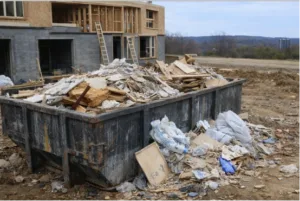
Here’s a number that stopped me when I first saw it: construction and demolition debris makes up roughly 30% of all landfill material in developed countries. Not industrial waste. Not municipal trash. Just us, building stuff.
For a typical house, that’s 3 to 5 tons of material that never gets used. Per unit. Scale that up to a 200-unit development and you’re looking at six figures in wasted spend before you even think about carbon emissions.
The stuff in those dumpsters wasn’t junk when it arrived. It was lumber that got rained on because storage wasn’t ready. Drywall that got damaged moving it around the site. Tile that sat too long and went out of style before installation. Extra material ordered “just in case” because nobody wants to be the one who runs out mid-project.
That “just in case” mentality? It costs way more than most builders realize.
Why Traditional Building Wastes So Much Material
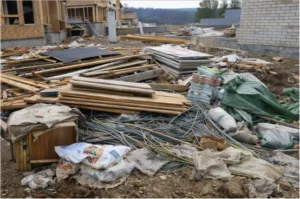
If you’ve managed projects, you know the drill. The site’s a mess. Materials are stacked wherever there’s space. Weather’s unpredictable. Crews are under pressure to keep moving. Somebody measures twice but still cuts wrong. Plans change mid-stream and suddenly the materials staged for phase two don’t work for phase three.
Nobody’s trying to waste anything. It’s just the nature of building outdoors, with dozens of trades, on a timeline that never feels long enough.
But here’s the thing: when you step back, almost every source of waste on a traditional site comes from the same root cause. You’re doing too much of the work in the wrong place, plain and simple.
How Factory Building Cuts Down Waste
I spent a few days in a modular factory last year. The thing that stuck with me wasn’t the robots or the assembly line. It was how quiet everything was. No radios blasting. No nail guns. No sawdust blowing around. Just people working at stations, with exactly the materials they needed for that day’s work.
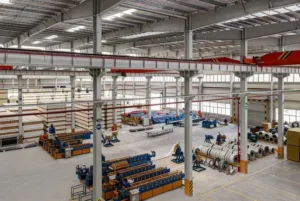
This shift is the core reason how modular homes reduce construction waste compared to traditional building.
In a factory, materials don’t sit outside getting ruined. They’re delivered just-in-time, cut to spec, and installed within days. Cut a board wrong in a factory? You fix the process. Cut it wrong on-site? It goes straight to the dumpster.
The Modular Building Institute did a deep dive a couple years ago. They found factory-built construction cuts material waste by 70 to 90 percent versus conventional methods. For a 50-unit project, that’s about 40 tons of lumber, drywall, and packaging that never ends up in a landfill. This is exactly how you reduce building waste with modular construction on real jobs.
What Makes Expandable Container Houses Stand Out
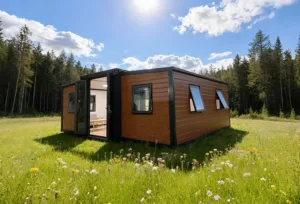
I’ve been watching the expandable container house space for a while now. What’s interesting isn’t the folding mechanism—it’s the design philosophy behind it.
These units start with shipping container dimensions, so everything is standardized from day one. The steel frame, the insulation panels, the interior finishes—all pre-engineered to fit. No last-minute “make it work” moments. No cutting corners because something doesn’t line up.
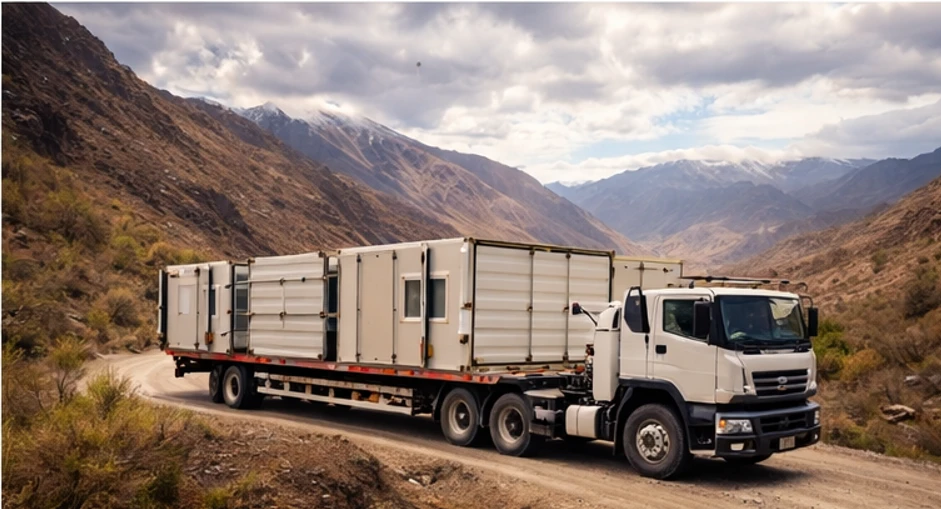
And because they ship folded, you’re not just saving on-site waste—every truck carries more units, which means fewer trips, less fuel, and less packaging waste before the units even arrive.
The steel itself matters. Unlike wood framing (30-to-50-year lifespan), galvanized steel frames last forever and recycle completely. Most importantly, you can pick the whole unit up and move it—something you can’t do with stick-built construction.
We worked with a contractor in Western Australia last year, 120 units for a remote infrastructure camp. When the project wrapped, they didn’t demolish a thing. Folded 90 percent of the units, trucked them straight to the next job site. Zero demolition waste. I’ve never seen a job site clean up that easy.
That’s not a small tweak. That’s a whole different way to build.
The Real Benefits for Developers
Less waste sounds good in theory. Here’s what it actually means for your project.
Fewer dumpsters. Every haul-away you skip is cash back in your budget.
Faster schedules. Factory work runs while you prep the site, installation takes days not months. Less time on-site means less overhead, earlier revenue.
Better ESG scores. Investors watch this now. Lower waste profiles mean better certifications, easier access to green capital.
Cleaner sites. Less stacked material means fewer accidents, less clutter, easier work for your crew.
Where Expandable Container Homes Get Used

The expandable container house isn’t a niche product anymore. It’s everywhere:
- Mining camps in the Atacama, where hauling materials is way too costly
- Disaster zones, where speed and leaving no waste matter most
- Eco-resorts that need to leave the site untouched
- Urban infill sites where traditional construction shuts down neighborhoods for months
- Government housing programs trying to stretch budgets and hit green rules
Same play every time: factory build, fold for delivery, unfold on-site, move it later instead of trashing it.
Frequently Asked Questions (FAQ)
What is sustainable construction?
It’s building without creating more problems than you solve. Use materials efficiently, keep waste low, build things that can be reused instead of torn down.
How does modular construction reduce waste?
No more outdoor work. Materials stay dry, cuts are precise, you only order what you need. Most traditional waste comes from ruined materials or bad on-site cuts.
Are expandable container houses actually green?
Compared to traditional buildings that get demolished in 50 years? Absolutely. Steel recycles forever, units move instead of getting trashed, construction waste is a tiny fraction.
Can modular help with LEED or other certifications?
100%. Waste reduction is a huge part of the scoring. Show lower material use and less demolition waste, your scores go up, no exceptions.
Wrapping Up
For a long time, we treated construction waste like weather—unavoidable. But that’s changing. Material costs are up. Landfill fees are up. Regulators are paying attention.
Modular construction breaks the old cycle. Not because it’s fancy, but because it moves work indoors, where you can control it. Materials don’t get rained on. Cuts are precise. “Just in case” ordering stops making sense.
That’s how you go from millions of tons of construction debris a year to something that actually makes sense. That’s how modular homes reduce construction waste by up to 80%—not in theory, but on real job sites.
For developers, understanding how modular homes reduce construction waste isn’t just a sustainability talk—it’s part of the budget math. GS Housing’s prefabricated container homes are built to cut this waste from day one.
If you have questions about your next build,we’re here to help with your project plan.