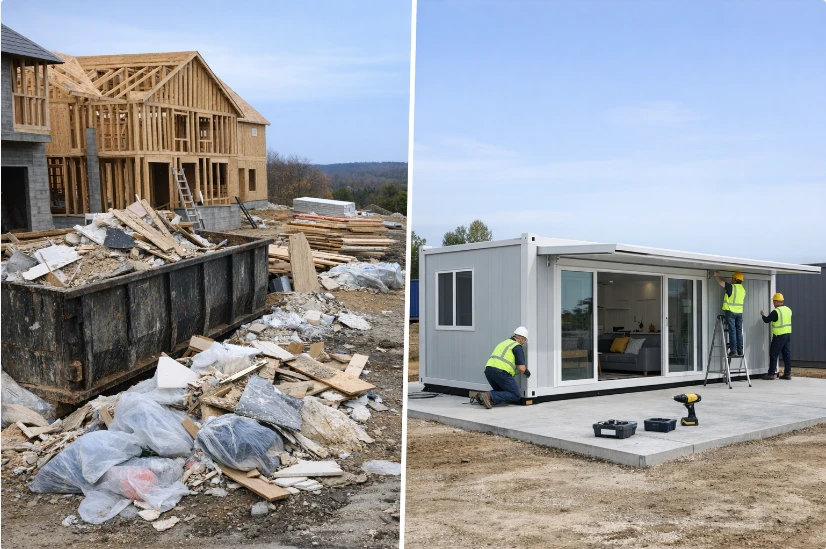
If you’ve looked into affordable housing Australia lately,, you probably already know the problem. Building a home here has never been cheap, but the last few years pushed costs into another league.
I’ve sat through dozens of developer meetings across NSW, Queensland and WA over the last 8 years, and this is the exact conversation we have every single time. Developers, investors, even small builders are all asking the same question: how much does it cost to build a house in Australia now? The answer depends on location, labor availability, and materials — but the bigger issue is uncertainty. Projects stretch longer than planned. Budgets blow out. Timelines slip.
That’s why more people across the industry are starting to look at modular homes Australia, prefabricated houses Australia, and increasingly container homes Australia. Not because they’re trendy. Because they give builders something traditional construction often doesn’t anymore — predictable costs.
And right now, predictability matters more than ever.
Why Housing Costs in Australia Keep Rising
Anyone who has managed a residential project in Australia knows the pattern.
Land prices climb first. Then labor follows. Materials rarely move downward either.
But one factor often gets overlooked when people talk about housing costs: time.
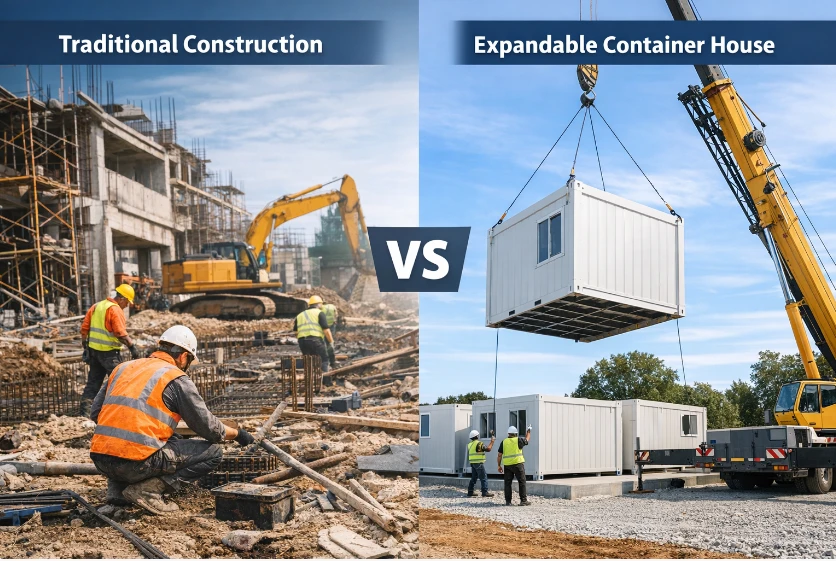
Traditional construction moves step by step. Foundations first. Then framing. Then plumbing and electrical. After that come inspections, internal finishes, exterior work, and so on. Each stage waits for the previous one to finish.
Weather interruptions are common. Skilled tradies aren’t always available exactly when you need them. Delays start stacking up.
And every extra week on site adds cost.
Builders pay longer for equipment hire. Temporary power and water keep running. Site security stays in place. Investors wait longer before a property starts generating income.
It’s no surprise the conversation around modular housing cost Australia has become much more common. Developers are realizing the biggest opportunity to control budgets isn’t just negotiating material prices — it’s changing the construction process itself.
How Much Does It Cost to Build a House in Australia in 2025?
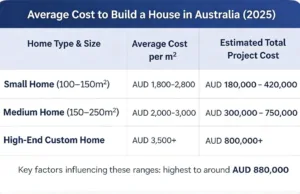
Key factors influencing these ranges:
Location
Labor costs in Sydney or Melbourne are often 20–25% higher than in regional areas.
Material supply chains
Australia relies heavily on transported building materials. Long distances add logistics costs quickly.
Tradie availability
Skilled workers are limited in certain regions. When demand increases, wages follow.
Construction duration
The longer a project runs, the more overhead expenses accumulate.
Many people exploring prefab house price Australia find that modular systems can create meaningful cost differences without compromising quality.
A standard expandable container house build typically reduces total construction cost by 40–60% compared to traditional brick homes. These differences come down to three clear, consistent areas:
Material savings
Traditional builds require full structural framing, walls, roofing and flooring. Container homes use a steel frame as the core structure, with insulation, finishes and utilities added on site.
For a 100–120m² home, material savings generally fall between AUD 70,000–96,000.
Labor efficiency
Traditional construction relies on multiple trades working sequentially over many months. Modular and container builds complete most work in a factory, with on-site work limited to assembly and connections.
Labor savings typically range from AUD 25,000–42,000.
Lower hidden costs
Traditional builds often carry significant hidden costs: site preparation, temporary utilities, fencing and long-term equipment rental. Modular projects require less site work and shorter timelines.
Hidden costs drop from AUD 20,000–40,000 to around AUD 5,000–10,000, creating additional savings of AUD 18,000–32,000.
Combined, these differences create a measurable improvement in budget reliability for Australian residential and commercial builds.
How Modular Homes Australia Change the Building Process
The biggest difference with modular homes Australia isn’t the materials. It’s where the work happens.
Instead of building everything outdoors on a construction site, most components are produced inside a factory environment.
Walls, insulation panels, window frames, and interior finishes are prepared in controlled conditions. When modules arrive on site, they are already close to finished.
This approach solves several common construction problems:
- Material waste drops because factory cutting is precise —we explained this in detail in our earlier guide on modular construction waste
- Weather delays have far less impact on the schedule
- Site work and module production can happen at the same time
Instead of a project lasting most of a year, many modular homes are completed within two to four months.
For developers, this shorter timeline often makes a bigger financial difference than material savings alone.
Why Container Homes Australia Often Offer the Lowest Build Cost
Among modular solutions, container homes Australia
have become especially popular for cost-focused projects.
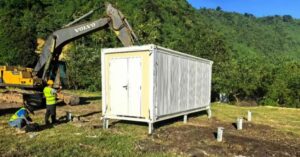
Expandable container houses start with a structural steel frame — the container itself. That eliminates much of the framing work required in traditional construction.
Transport efficiency also improves.
Because expandable units can be folded for shipping, multiple homes can travel on a single truck or container load. That reduces logistics costs, which matters a lot in regional Australia where freight distances are long.
Last year, I worked directly with a small developer in regional New South Wales who needed fast worker accommodation near a mining support project. They originally planned a conventional build.
After reviewing cost and timeline projections, they switched to modular container units.
Twelve accommodation units were installed in just under three months. The total cost came in roughly 40% below the original estimate, and when the project finished, the units were moved to another site instead of demolished.
For temporary or semi-permanent housing, that flexibility changes the economics completely.
Are Container Homes Comfortable and Code-Compliant in Australia?
This is the part I get asked about more than any other: do container homes meet Australian building regulations, and do they actually feel like a proper home?
The short answer to both is yes — provided they follow the National Construction Code (NCC) and are fitted out correctly.
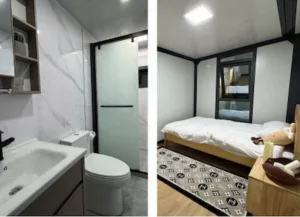
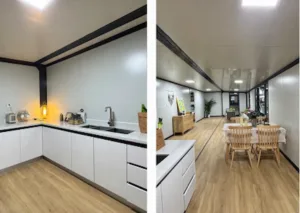
Modern prefabricated houses Australia typically include insulation systems, moisture protection, and certified electrical and plumbing installations. 90% of this work happens during factory production, so you don’t have to coordinate multiple trades on site to hit compliance marks.
Compliance costs typically only make up 5-8% of the total build cost, compared to 10-15% for traditional builds that often need last-minute rework to pass council inspections.
Comfort levels are also identical to many conventional homes when done right.
Proper insulation panels maintain stable indoor temperatures, even through Australia’s extreme hot and cold snaps. Steel frames provide solid structural strength and better acoustic separation than many lightweight traditional builds.
Maintenance tends to be simpler too. Annual inspections mainly involve checking seals and protective coatings. Costs often stay around AUD 300–500 per year, significantly lower than the AUD 1,000–1,500 average for traditional house upkeep.
Frequently Asked Questions (FAQ)
Are container homes legal in Australia?
100% legal, as long as they meet the National Construction Code (NCC) for structural safety, fire protection, insulation, and electrical systems — just like any other residential structure. All units are pre-engineered to meet these standards during factory production.
What is the cheapest way to build a house in Australia?
For most projects in 2025, modular construction and expandable container housing provide consistent, lower overall costs. Factory production reduces labor time, material waste, and schedule delays — the biggest drivers of budget overruns in traditional building.
How long does it take to build a modular or container home?
Most modular housing projects in Australia take around 2–4 months from production start to final sign-off. Traditional brick builds typically take 6–12 months, depending on weather, labor availability and site conditions.
Do building costs vary across Australian states?
Yes, costs can vary by 25–40% across Australia, mostly due to transportation and local labor rates. Sydney and Perth are generally higher, while South Australia and many regional areas offer more affordable build conditions.
Final Thoughts
Building in Australia isn’t getting cheaper anytime soon.
Labor shortages remain a challenge. Materials continue to fluctuate. Traditional construction timelines rarely move faster.
Because of that, many developers are rethinking how homes are built in the first place.
Modular homes Australia, prefabricated houses Australia, and container homes Australia aren’t replacing traditional construction entirely. But for many projects — especially those focused on affordable housing Australia — they are becoming one of the most practical solutions available.
If you’re exploring modular or container housing for an Australian project, our GS Housing team is happy to share practical insights from real deployments.
Sometimes the most effective way to control construction costs isn’t negotiating harder with suppliers.
It’s changing the way the building gets built.