Updated March 2026: This guide reflects GS Housing’s actual factory pricing for the Australian market, with no inflated estimates — just real, transparent costs for expandable container houses.
If you’re searching for expandable container house price, container house cost, modular container house price, or prefab container house price in Australia, you’re probably not just browsing.
Most people looking this up are trying to answer a very practical question:
How much is this actually going to cost — and will it work for my project?
And that’s fair.
Anyone who has tried to build in Australia recently already knows — costs don’t really move downward anymore. Materials fluctuate, skilled labor isn’t always available when you need it, and timelines rarely go exactly as planned.
That’s exactly why more developers, contractors, and project buyers are turning to modular container house solutions.
Not because they’re new.
But because they offer something traditional construction often doesn’t anymore — cost control and predictability.
We’ve broken this down further in our guide on container homes in Australia and affordable housing strategies.
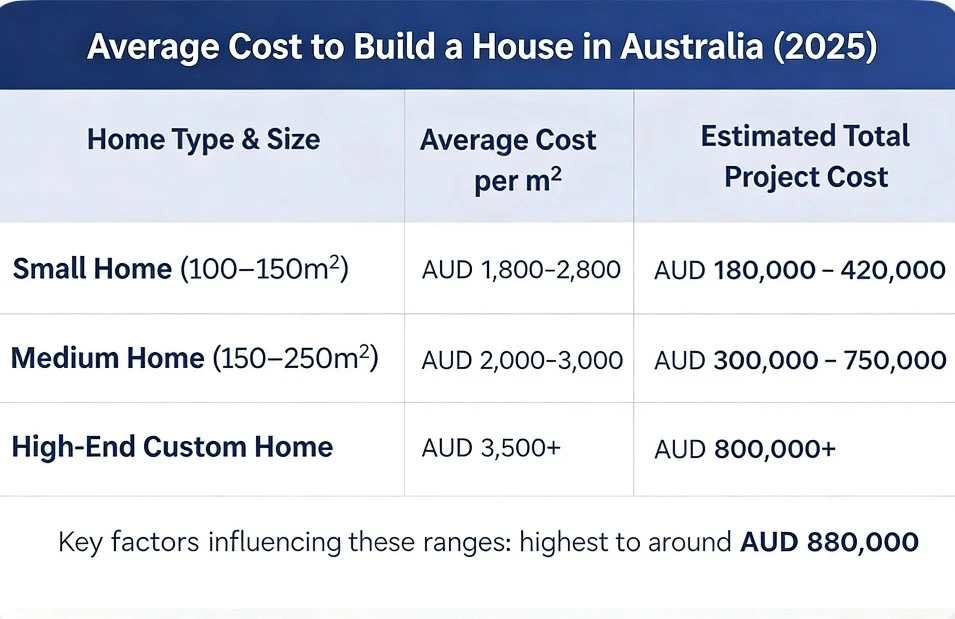
Traditional Construction Cost in Australia (And Why Expandable Container House Price Is More Predictable)
For most developers, the pattern is familiar.
Land prices increase first. Labor follows. Materials rarely get cheaper.
But one factor tends to get underestimated — time.
Every additional month on a construction site brings real cost:
- Extended labor expenses
- Equipment and machinery rentals
- Ongoing site overhead
- Delayed revenue or project turnover
This is why many buyers comparing prefab container house price with traditional construction are no longer just looking at material costs.
They’re looking at total project cost over time — which often tells a very different story.
Why Expandable Container Houses Offer a Cost Advantage
Expandable container houses aren’t simply a lower-cost alternative.
They change where and how the work gets done — and that’s where the savings come from.
Instead of building everything on-site, most components are produced in a controlled factory environment. That shift alone removes several major cost variables.
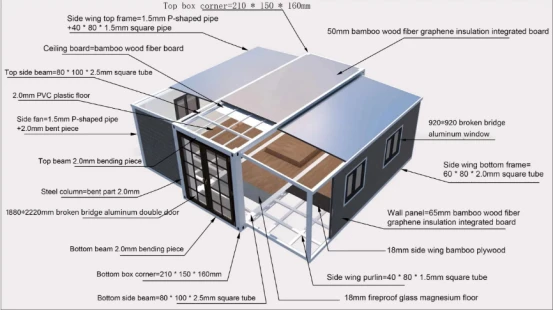
Structural Integration (Lower Structural Cost)
The container itself acts as the primary steel structure.
This eliminates:
- Large portions of framing work
- Significant structural material costs
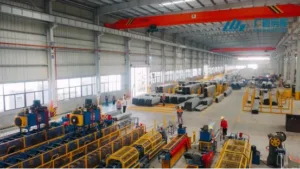
Factory Production Efficiency (Reducing Prefab Container House Price)
Factory-based construction allows for:
- Precise material usage
- Faster assembly
- Consistent quality control
Compared to traditional builds, material waste can be reduced by 70–90%.
Reduced Labor Dependency (Lower Labor Cost in Australia)
Instead of coordinating multiple trades on-site:
- Most work is completed in advance
- On-site activity is limited to installation
This significantly lowers labor complexity and cost.
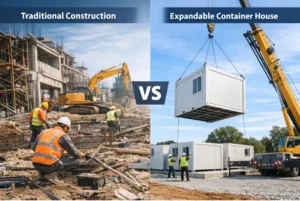
Faster Project Timelines (2–4 Months vs 6–12 Months)
A typical residential build in Australia may take: 6–12 months
Expandable container projects are commonly completed in: 2–4 months
For developers, that time difference often has a bigger financial impact than material savings alone.
2026 Expandable Container House Price in Australia (GS Housing Factory Pricing)
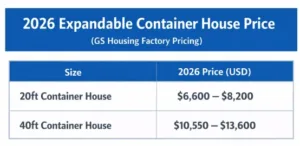
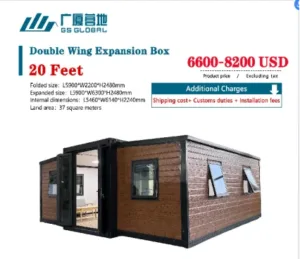
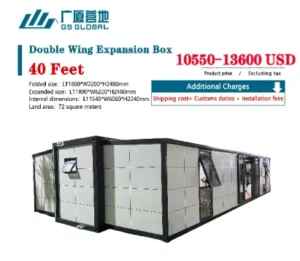
Now to the part that matters most — GS Housing’s real, published factory pricing for Australian projects:
Size 2026 Standard Configuration Price (USD)
20ft Container House $6,600 – $8,200
40ft Container House $10,550 – $13,600
20ft expandable container house price and specifications :
- Galvanized steel structure
- Insulated wall panels suitable for Australian climates
- Basic electrical system
- Doors and windows
Common use cases:
- Worker accommodation
- Site offices
- Temporary housing
40ft Expandable Container House
- Larger usable space
- More flexible layouts
- Lower cost per square meter
Typical applications:
- Affordable residential housing
- Mining and infrastructure camps
- Rental or investment units
Important: These figures reflect GS Housing’s standard factory configurations for Australia. Final project cost will vary depending on:
- Interior upgrades (kitchen, bathroom, HVAC)
- Climate-specific insulation requirements
- Order volume
- Transport distance within Australia
Key Factors Affecting Expandable Container House Price in Australia
Even with a base price, a few things will move the needle on what you actually pay.
Size and Layout
20ft vs 40ft isn’t just about space. It’s about how efficiently you use that space across your whole project. Larger layouts increase total price but usually improve cost efficiency per square meter.
Interior Configuration
A basic shell is one price. Add a kitchen, bathroom, HVAC? That’s a different number. Worth it for long-term use, but it adds up.
Material Quality
Australian conditions don’t mess around. Better insulation, thicker steel, proper waterproofing — they cost more upfront, but they save you from repairs later.
Transportation Costs
This is where expandable units earn their keep. Folded design means more units per truck, which matters when you’re shipping to remote sites.
Order Volume
Simple math: buy more, pay less per unit. Developers already know this.
NCC compliance requirements for container homes in Australia
Not optional. But getting it right upfront beats fixing it after approval falls through.
Expandable Container House Applications in Australia (Common Scenarios)
So where are people actually using these things in Australia? Turns out, pretty much everywhere.
Worker Accommodation
Mining and infrastructure projects across WA, QLD, and NSW rely on fast, relocatable housing.
Temporary & Disaster Relief Housing
Speed and mobility make these units ideal for emergency deployment.
Site Offices
Flexible, movable office solutions for construction projects.
Rental & Investment Units
Used for short-term rentals, eco-resorts, and granny flats.
Residential Use
Increasingly adopted for affordable housing, backyard units, and remote or off-grid living.
How to Choose a Reliable Expandable Container House Supplier in Australia
Price is important — but the wrong supplier can cost far more over time.
Direct Manufacturing Capability
Working with a factory (not a trader) usually means better pricing, more consistent quality, and greater customization flexibility.
Engineering & Compliance
Ensure the supplier understands structural requirements, NCC standards, and climate adaptation.
Real Project Experience
Suppliers with actual project delivery experience tend to handle logistics more efficiently, understand local requirements, and reduce project risk.
Customization Options
Every project is different. Flexibility in layout and configuration is essential for long-term usability.
Over the past three years, GS Housing has delivered over 200 NCC-compliant expandable container house projects across Australia, with a strong track record in cost and timeline control.
Final Thoughts: Is Expandable Container House Price Worth It in 2026?
The real question isn’t just: “What is the expandable container house price in 2026?”
It’s: “What will my total building cost look like — and how predictable is it?”
I’ve seen too many projects where the lowest quote turned into the highest cost — because nobody planned for the variables. This approach isn’t magic. It’s just more predictable.
Traditional construction offers flexibility, but often comes with uncertainty.
Expandable container houses offer a different approach:
- Faster delivery
- Lower overall cost
- Predictable timelines
- Scalable solutions
If you’re still comparing different building options, it can be useful to look at real project-based pricing and see how different approaches perform under actual conditions.
Sometimes, the most effective way to reduce construction cost isn’t negotiating harder.
It’s changing how the project gets built.
GS Housing has worked with contractors and developers on expandable container house projects across Australian mining, infrastructure, and residential sectors. This guide is part of our series on how modular building actually works in the real world.
If you’re working on an upcoming project and want to understand how these numbers apply in practice, we’re happy to share
real expandable container house pricing for your project and what tends to work best in different Australian conditions.