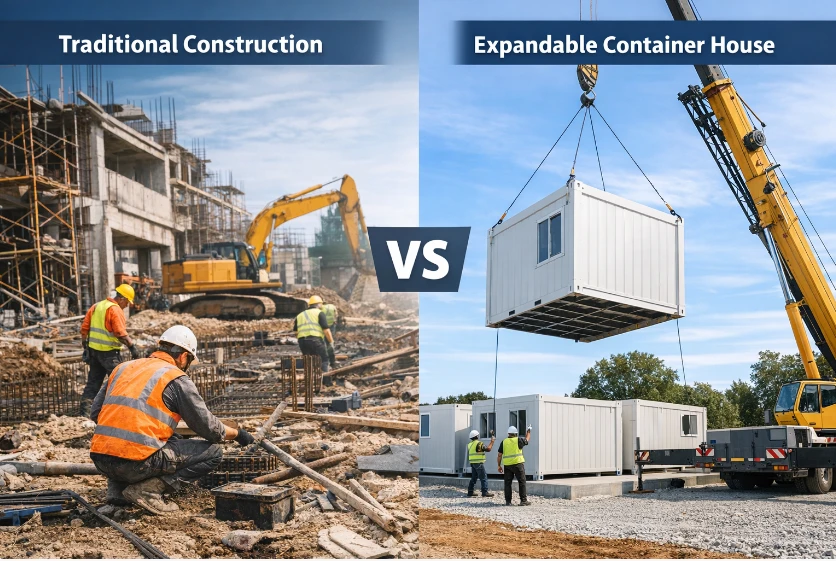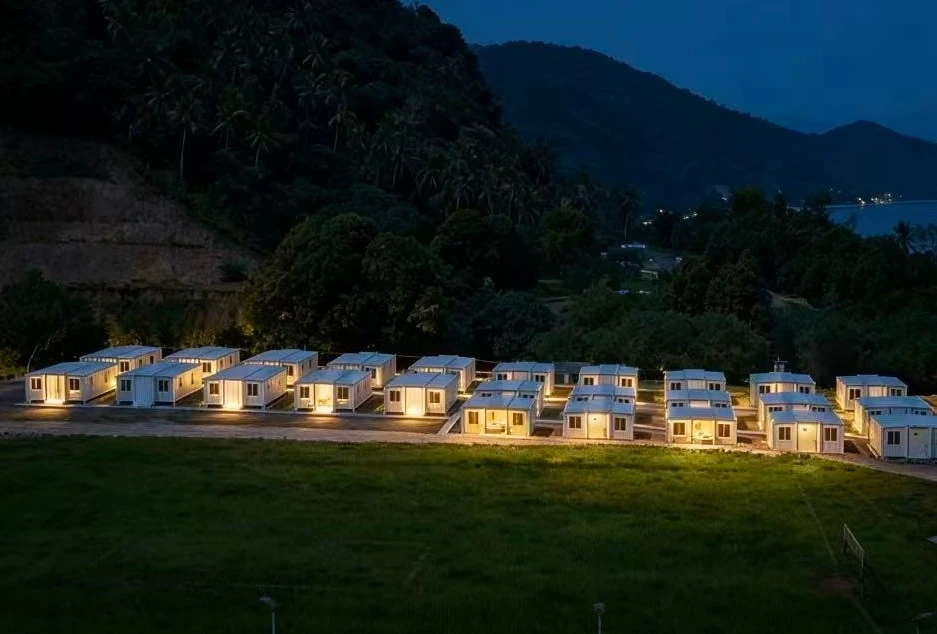
I’ve worked in global modular and expandable container construction for over 20 years with GS Housing, and this guide focuses on what actually works in real projects — not concepts, not showroom demos, but systems we’ve seen perform under pressure.
If you’ve been researching smart expandable container house solutions or expandable container houses, you’ve probably noticed something:
The conversation has shifted.
It’s no longer just about square footage or upfront cost. More developers and contractors I work with are asking a more practical question:
What smart technology does this unit actually support — and will it make operations easier or just more complicated?
Because in 2026, a container home isn’t just a steel structure.
It’s a fully integrated system.
What Is a Smart Expandable Container House?
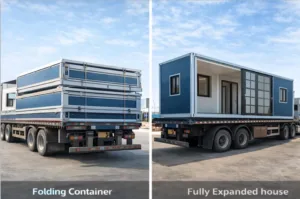
At its core, a smart 20ft expandable container house is a modular unit that integrates systems like climate control, security, and energy management directly into a factory-built expandable structure.
Unlike traditional construction — where systems are installed separately and often don’t integrate well — everything here is pre-installed, wired, and tested before delivery.
And in real projects, this is usually where the gap between a “basic unit” and a “well-designed system” becomes obvious.
What Smart Systems Are Used in Smart Expandable Container Houses?
Before we get into specific smart features, it helps to understand how these systems are physically integrated into the structure.
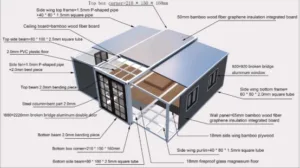
We don’t design around features — we design around how the unit will actually be used.
After hundreds of global deployments, a few systems consistently prove their value.
At GS Housing, we’ve seen these systems perform across mining camps, infrastructure projects, and residential deployments in over 60 countries — and the patterns are surprisingly consistent.
Smart Climate & Energy Systems
In extreme environments — whether it’s desert heat or freezing conditions — climate control isn’t optional.
Smart HVAC systems adjust based on occupancy, monitor air quality, and only run when needed. You’re not cooling empty rooms or heating unused units.
This is a key part of any 40ft expandable container house with energy-efficient design.
In practice, it means stable indoor conditions without unnecessary energy waste — which matters more than most people expect, especially in large deployments.
Security & Monitoring Systems
This is usually the first upgrade clients ask for.
Instead of keys that get lost or copied, smart access systems allow controlled entry through apps or biometrics, with real-time alerts for every unit.
Add cameras and motion sensors, and you can monitor multiple sites remotely without relying on round-the-clock on-site security teams.
For remote projects, this alone can significantly reduce risk and operating costs.
Centralized Smart Control Systems
This is where things start to feel different operationally.
Instead of managing separate systems, everything runs through one simple control interface — lighting, HVAC, security, power.
You can automate basic actions like:
– Turning off systems in unused units
– Adjusting temperature before occupancy
– Reducing energy load during idle periods
And honestly, even a simple setup here can make day-to-day management noticeably easier.
Smart Water & Sustainability Systems
Water-related issues are one of the most expensive problems we see on-site — and they’re often preventable.
Smart leak detection systems respond immediately, shutting off water before damage spreads. Usage monitoring also helps reduce waste, which adds up significantly over time.
This is where advanced expandable prefab house technology starts to show clear long-term value.
For remote or off-grid projects, adding greywater reuse or rainwater systems can further reduce dependency on external supply.
Connectivity & Off-Grid Infrastructure
A smart system is only as reliable as its connection.
We build in network infrastructure from the start — Wi-Fi coverage, optional signal boosters, and seamless integration with solar and battery systems where needed.
These are some of the most practical smart features in expandable container homes today.
In most cases, combining connectivity with solar and storage can reduce energy costs by 20–30% while maintaining stable operation even in low-infrastructure environments.
The Real-World Benefits of Smart Expandable Container Houses
The technology itself isn’t the main point.
What matters is how it changes the way a project runs.
Factory-Tested Reliability
Everything is installed and tested before shipping.
That removes most of the uncertainty that comes with on-site system integration — fewer errors, fewer delays, fewer costly surprises.
Lower Long-Term Operating Costs
A typical smart setup adds around 5–8% to upfront cost.
In most cases, that gets recovered within 2–3 years through reduced energy consumption, fewer emergency repairs, and better overall system efficiency.
Simpler Day-to-Day Operations
This is where most clients notice the biggest difference.
Instead of reacting to problems, systems send alerts early. Instead of manual control, basic automation handles repetitive tasks. Managing multiple sites becomes much more predictable.
Better Living and Working Conditions
Stable temperatures, cleaner air, and consistent lighting improve comfort — which directly affects productivity in worker accommodation and long-term housing setups.
Scalable and Upgradeable Systems
Technology changes, and projects evolve.
These systems are designed so you can upgrade or expand later without rebuilding the entire unit.

A Quick Reality Check: What Most Buyers Overlook
Not every project needs full smart integration — and in some cases, a simpler setup is actually the better choice.
And in reality, most projects don’t need everything — just the parts that actually make operations smoother.
The key is choosing systems that match how the space will be used, not just adding features for the sake of it.
The Future of Smart Expandable Container House Technology
From what we’re seeing on current projects, the shift is moving toward deeper automation and energy independence.
AI-driven systems are starting to learn usage patterns and adjust automatically. Off-grid setups are becoming more stable and cost-effective. And in some regions, net-zero container housing is already moving from concept to reality.
The structure itself is no longer the main advantage — the system inside it is.
Frequently Asked Questions
Will adding smart systems increase the cost significantly?
Not significantly. A basic, fit-for-purpose smart package usually adds around 5–8% to upfront cost, and most projects recover that fully through lower energy and maintenance expenses within 2–3 years. You can also pick only the features you need to keep costs down.
Do these systems work without internet?
Yes. All core functions (climate control, leak detection, local access) operate fully offline. Internet is only needed for remote monitoring, with satellite upgrades available for extremely remote sites.
Are smart systems difficult to maintain?
No. Most components are modular and easy to replace without specialized training. Systems also provide early alerts before parts fail, so you can fix issues during scheduled maintenance, not in an emergency.
Can features be customized?
Absolutely. We never force you to pay for features you won’t use — we’ll build a setup that fits your exact project, whether it’s a remote mining camp or a residential resort.
Final Thoughts
Expandable container houses used to be chosen exclusively for speed and cost.
That’s still true — but it’s no longer the full picture.
A modern smart expandable container house combines fast deployment with system-level efficiency, giving you more control over how the space performs over time.
And in most projects today, that’s where the real advantage is.
After 20+ years in the industry, the GS Housing team focuses only on practical, fit-for-purpose smart systems that solve real project problems — no gimmicks. If you’re planning an upcoming project, we’re here to provide a customized smart expandable container house solution.