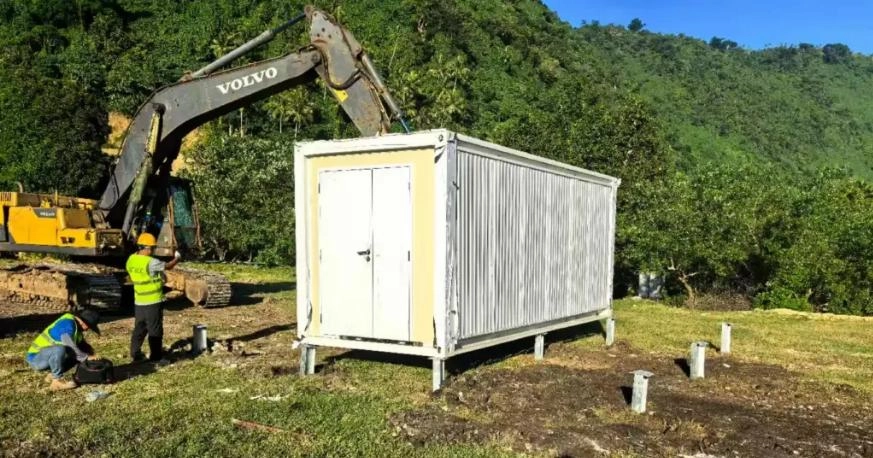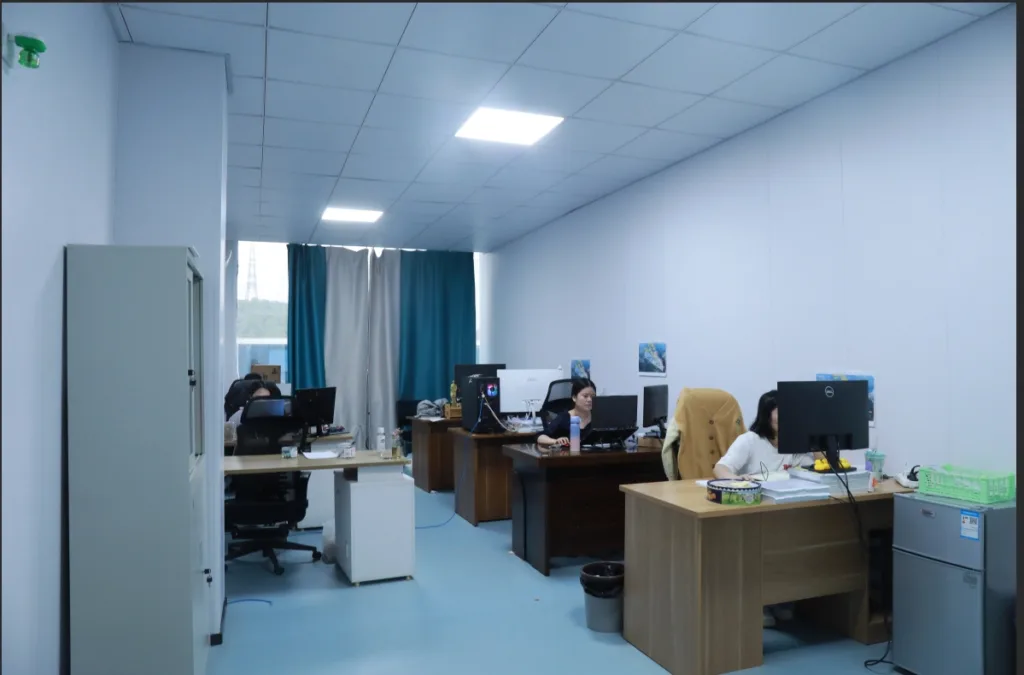
When buyers look into a typhoon resistant container house for extreme coastal environments, the conversation usually shifts quickly from features to risk.
It’s not really about price or layout anymore.
It’s about what happens on site — under real conditions.
Will it stay stable in a typhoon?
What happens after months of heavy rain?
And what actually happens when the ground starts moving?
When buyers look into a typhoon resistant container house for extreme coastal environments, the conversation usually shifts very quickly.
Not about price.
Not even about layout.
But about risk.
Will it stay stable in a typhoon?
What happens after months of heavy rain?
And more importantly — what actually happens when the ground starts moving?
Across projects in Southeast Asia, the Pacific, and colder inland regions, one pattern shows up again and again:
Failures in extreme climates are rarely caused by a single issue.
They usually come from small gaps in design — things that don’t show up until the structure is under real stress.
That’s why, instead of looking at isolated “features,” it makes more sense to look at how the system behaves as a whole.
Typhoon Resistant Container House: How Structural Design & Drainage Work Together
In coastal regions, wind is the first concern most buyers mention.
But in practice, water is often just as destructive — sometimes even more so over time.
Structural Stability After Expansion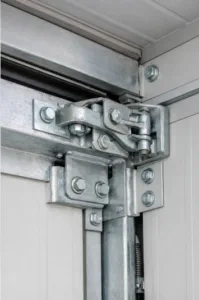
For double-wing expandable units, the key moment is after deployment.
Once the unit is opened, the side sections are mechanically locked into the main frame.
They’re no longer separate moving parts — they become part of a continuous structure.
That changes how the building reacts under pressure.
Instead of concentrating stress at connection points, wind loads are distributed across the full frame.
In real projects, this tends to result in more stable performance compared to simpler expandable designs where sections remain loosely connected.
Managing Heavy Rain and Drainage
Wind resistance alone doesn’t define a reliable typhoon resistant container house.
In coastal environments, exposure to water is constant — not just during storms, but throughout the building’s entire lifecycle.
Most systems rely on a few core elements:
- Sloped roofing (typically around 15°)
- Internal or hidden drainage channels
- Controlled discharge away from the structure
None of these are complicated on their own.
But when they’re missing — or not aligned with the site — problems tend to appear quickly.
In many real-world cases, it’s drainage failure, not wind load, that drives long-term issues with these typhoon resistant container house systems.
Real Project: Vanuatu Typhoon Resistant Container House Camp
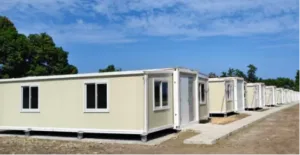
A project in Vanuatu shows how these details play out on site.
Conditions there were typical for a tropical coastal environment:
- High humidity year-round
- Continuous salt-air exposure
- Frequent heavy rainfall
- Seasonal typhoons
The project involved 20+ double-wing expandable units used for worker accommodation.
From a design standpoint, nothing excessive was added. The specialized setup focused on consistency:
- Locked structural system after expansion
- Sloped roof with integrated drainage
- Corrosion protection suited for coastal use
- Elevated foundation to reduce water accumulation
Since installation, the site has gone through multiple storm cycles, including typhoon-level winds.
No major structural issues were reported.
More importantly, the units remained operational during those periods — which, in remote projects, often matters more than anything else.
Before installation, proper site preparation for coastal container housing is just as critical as the building itself
Snow Load Design for Expandable Homes in Cold Coastal Regions
In colder regions, the problem shifts.
For a snow load prefab home, the biggest risk isn’t sudden force — it’s accumulated weight over time.
Snow-related failures rarely happen instantly.
They build up slowly, especially with repeated freeze–thaw cycles.
Roof Behavior Under Snow
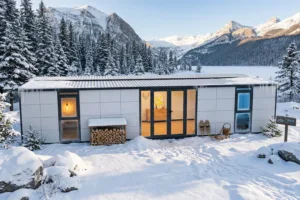
Instead of flat surfaces, most expandable units use a slight roof slope.
That doesn’t eliminate snow buildup entirely, but it reduces how long the load remains.
Combined with:
- Closely spaced steel purlins
- Insulated sandwich panels
- Reinforced load paths
…the structure handles sustained pressure in a more predictable way.
In practice, designs are usually adjusted based on regional standards rather than a fixed global number.
What Happens During Snow Melt
One detail that often gets overlooked is what happens after the snow starts melting.
If water isn’t guided away properly, it can refreeze at edges or joints — leading to gradual damage.
This is where drainage design becomes critical again.
The same drainage logic used for these coastal modular units applies here, just under colder conditions.
Earthquake Proof Modular Housing: Why Flexibility Matters
Seismic performance is a different kind of challenge.
It’s not about resisting force.
It’s about how the structure responds to movement.
Traditional masonry buildings rely on rigidity.
That works under static conditions — but becomes a weakness when the ground shifts.
Modular steel structures behave differently.
This is why the same steel frame used for these modular units also performs better in seismic zones.
Instead of resisting movement, the structure allows controlled flexibility.
Key factors include:
- Bolted connections rather than rigid joints
- Steel members that can flex without cracking
- Lower overall structural weight
None of these eliminate risk entirely.
But together, they change the failure pattern — which is often the difference between repairable damage and structural collapse.
The durability of this steel frame system is covered in detail in our expandable container house material durability guide.
Typhoon Resistant Container House: Why It Works as a Full Climate System
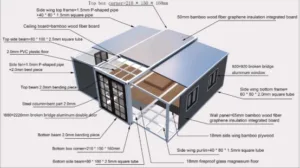
In real projects, climate risks rarely exist in isolation.
A coastal site may also experience seismic activity.
A cold region may still face strong winds.
That’s why it’s rarely effective to treat these as separate features.
Performance comes from how the full system works together:
- Structural frame
- Connection method
- Roof design
- Drainage paths
- Material selection
A reliable extreme weather shelter isn’t defined by one upgrade.
It’s defined by how these elements interact to create reliable expandable homes over time.
Final Thoughts
Extreme climates don’t always require complex solutions.
But they do require correct assumptions early on.
Most issues seen in the field — whether corrosion, leakage, or structural stress — can usually be traced back to small decisions made at the beginning.
Whether you’re sourcing this typhoon resistant container house solution for a coastal project, planning a snow load prefab home, or evaluating earthquake proof modular housing, those early choices define how the structure performs over its full lifecycle.
When design matches real site conditions, expandable systems tend to perform consistently.
When it doesn’t, problems usually show up later — and cost more to fix.
If you’d like to discuss a climate-adapted project for your region,
feel free to contact our engineering team or learn more about GS Housing’s 20+ years of modular construction experience.