When sourcing modular units overseas, most buyers don’t worry about the product first.
They worry about everything that happens after the order is placed.
Will the units arrive on time?
Will they pass inspection?
What happens if something goes wrong in transit?
For US contractors and project developers, container house transport is often the biggest unknown in the entire procurement process.
For many container house projects in the USA , this uncertainty alone becomes the biggest barrier before procurement even begins.
In real projects, delays and cost overruns rarely come from manufacturing.
They come from mismanaged logistics, unclear responsibilities, and weak supply chain control.
This is where a reliable procurement system makes the difference — not just a good product, but a process that works from factory floor to final installation.
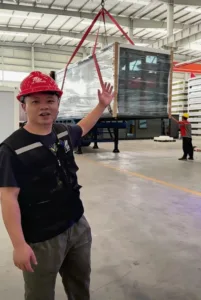
Why Container House Transport Is the Biggest Risk in Global Procurement Projects
On paper, ordering from an overseas container house supplier looks straightforward.
You confirm specs.
You receive a quote.
You place the order.
But in practice, large-scale projects involve many moving parts:
- Factory production timelines
- Quality control checks
- Export documentation
- Ocean freight scheduling
- US customs clearance
- Inland trucking to job site
Each step introduces risk.
Most problems do not happen at once — they compound across the chain.
A small delay at the factory can mean a missed vessel booking.
A documentation error can hold cargo at port for weeks.
Poor packaging can lead to damage before the unit even reaches the site.
For buyers managing multi-unit orders, container house transport is not just logistics.
It’s project risk management.
If you’re evaluating this from a business perspective, many of these risks also directly impact margins and delivery timelines discussed in this expandable container house business guide for global distributors.
Factory-Level QC for Container House Transport: Preventing Problems Before Shipping
The most effective way to control transport risk is not during shipping.
It’s before the product leaves the factory.
For any experienced expandable container house manufacturer, QC is built into production — not added as an afterthought.
What QC Looks Like in Practice
Before shipment, commercial-grade units typically go through:
- Structural integrity checks (frame alignment, weld quality)
- Waterproof testing (roof sealing, drainage performance)
- Door and window sealing tests
- Electrical system verification
For higher-standard projects, these checks are not only internal.
They are documented and shared directly with the buyer.
Buyers receive:
- Test videos
- Inspection photos
- Final checklist reports
This creates full transparency before shipping — so issues are caught early, not discovered on-site in the US.
Once a unit is on the water, corrections become extremely expensive.
Understanding Container House Transport: From Factory to US Job Site
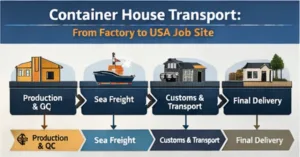
For many buyers, terms like CIF or DDP sound familiar — but the actual process behind them is often unclear.
And that is where confusion and unexpected costs begin.
CIF vs DDP in Container House Transport: What US Buyers Need to Know
CIF (Cost, Insurance, Freight)
Under CIF terms:
- The supplier covers ocean freight and basic insurance.
- The buyer handles US port clearance, import duties, and inland transportation.
This works best for buyers with an established logistics team in the US.
DDP (Delivered Duty Paid)
With DDP, the supplier manages the full process:
- Export documentation
- Ocean shipping
- US customs clearance
- Duties and taxes
- Final delivery to the job site
For most international buyers entering the US market, DDP significantly reduces complexity.
Instead of coordinating multiple vendors, the entire container house transport chain is managed by one partner.
What Happens at the US Port During Container House Transport
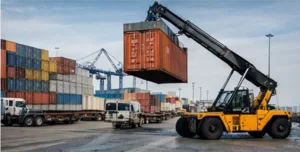
This is where many projects face costly delays.
Common issues include:
- Incomplete documentation
- Incorrect HS codes
- Customs inspection holds
- Port congestion
An experienced container house supplier will pre-handle:
- Customs paperwork preparation
- Broker coordination
- Full compliance with US import regulations
In one recent US-bound project, a missing customs document delayed clearance by nearly two weeks, which pushed back site installation schedules and increased temporary storage costs at port.
This step alone determines whether cargo clears in days — or sits at port for weeks.
For projects that must meet strict approval timelines, understanding how logistics connects with compliance is critical. This becomes even more important when dealing with expandable container house office USA requirements and inspection processes.
Final Mile Delivery: The Last Step of Container House Transport to Site
Getting units from port to site involves more than just booking a truck.
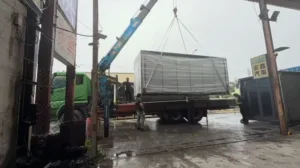
It requires:
- Route planning (bridge clearance, road access)
- Delivery scheduling (site readiness)
- Offloading equipment (crane or forklift coordination)
For expandable units, transport efficiency becomes even more important.

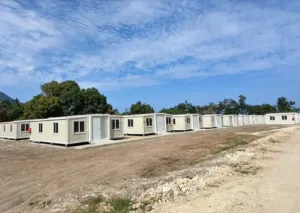
Foldable designs allow:
- More units per shipment
- Lower per-unit shipping cost
- Faster unloading on site
This is where product design directly improves logistics performance.
Batch Customization by Container House Supplier for US Projects
Transport is only part of the equation.
For large-scale procurement, customization reduces downstream costs significantly.
Instead of modifying units after arrival, experienced suppliers adjust specifications during production.
What Can Be Customized at Scale
For US commercial projects, common batch customization includes:
- Exterior branding colors
- Interior layout adjustments
- Electrical standards (US compliance)
- Insulation upgrades
This reduces:
- On-site modification work
- Installation time
- Overall project complexity
For contractors working with tight deadlines, this is often more valuable than small savings on unit cost.
How a Reliable Container House Supplier Controls the Full Supply Chain
From the outside, container house procurement looks like a product decision.
In reality, it is a supply chain decision.
A strong supplier does not just deliver units.
They control:
- Production consistency
- Quality verification
- Shipping coordination
- Customs clearance
- On-time delivery execution
This level of control separates a basic container house supplier from a true project partner.
Common Container House Transport Mistakes in US Projects
Across multiple US-bound projects, the same issues appear repeatedly:
1.Underestimating shipping complexity– Buyers treat logistics as “standard” until costly delays happen.
2.Lack of visibility during production– No inspection reports → problems discovered too late.
3.Misaligned responsibilities– Unclear whether supplier or buyer manages specific steps.
4.No buffer for customs delays– Tight schedules leave no room for inspections or clearance issues.
None of these are technical failures.
They are process failures — and they can be avoided with the right procurement structure.
How to Choose the Right Container House Supplier for US Projects
Not every container house supplier is equipped to handle US-bound logistics.
When evaluating potential partners, look for:
1.Proven QC documentation
Do they share test videos and inspection reports before shipping?
2.Clear logistics structure
Can they handle DDP door-to-door, or only basic CIF?
3.US compliance knowledge
Do they understand US port procedures, HS codes, and customs requirements?
4.Batch customization capability
Can they adjust exterior colors, interior layouts, and electrical standards at scale?
5.Transparent communication
Do they provide real-time updates from factory to final mile?
A supplier that controls the full chain — from production to delivery — reduces your risk and simplifies your project.
You can get in touch with our US project team for a tailored logistics and procurement plan.
Container House in USA: Why Logistics Defines Success
For container house in USA applications — whether for:
- Construction site offices
- Workforce accommodation
- Temporary commercial spaces
the product itself is only part of the equation.
What determines success is whether the units:
- Arrive on time
- Match specifications
- Are ready for immediate use
That outcome depends entirely on how well container house transport is managed.
Final Thoughts: Procurement Is More Than Purchasing
In global modular construction, buying the unit is the easy part.
Managing the journey from factory to project site — that’s where most projects succeed or fail.
Reliable procurement means:
- Transparent quality control before shipping
- Clear logistics structure (CIF or DDP)
- Controlled customs and delivery process
- Alignment between production and project requirements
When these elements are in place, container house transport becomes predictable.
And when it’s predictable, projects move faster, costs stay under control, and risks are minimized.
If you’re planning a US project and want to better understand how logistics, customization, and compliance fit together, it’s worth working with a team that manages the full process — from factory production to final delivery on your project site.
You can also explore container house transport solutions to see how different configurations are optimized for shipping efficiency and US project requirements.