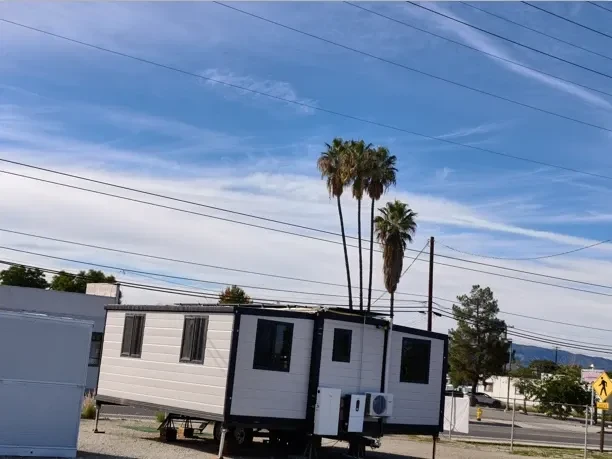
Why Container Homes for Rental Are Becoming a High-Return Investment
Most real estate investments take time.
You acquire land.
You plan.
You build.
And then — months later — income finally starts.
That timeline is exactly what many investors are trying to compress in 2026.
Not by cutting corners, but by changing how projects are delivered.
In many US markets, rental demand continues to outpace supply — especially in entry-level and flexible housing segments.
That’s where container homes for rental are gaining traction.
Instead of treating housing as a one-time construction project, more developers are approaching it as a repeatable system — something that can be deployed quickly, scaled gradually, and adjusted as demand changes.
The appeal isn’t just lower upfront cost.
It’s the combination of:
- Faster time to revenue
- Lower construction risk
- Flexible deployment across multiple sites
In other words, the investment logic shifts from:
“build once and wait” → “deploy, earn, and expand.”
5 Proven Ways Container Homes for Rental Generate Fast ROI and Scalable Profit
Not all projects use container housing the same way.
But across different markets, five models consistently stand out for generating fast and scalable returns.
1. Tourism & Resort Accommodation with Container Housing Solutions
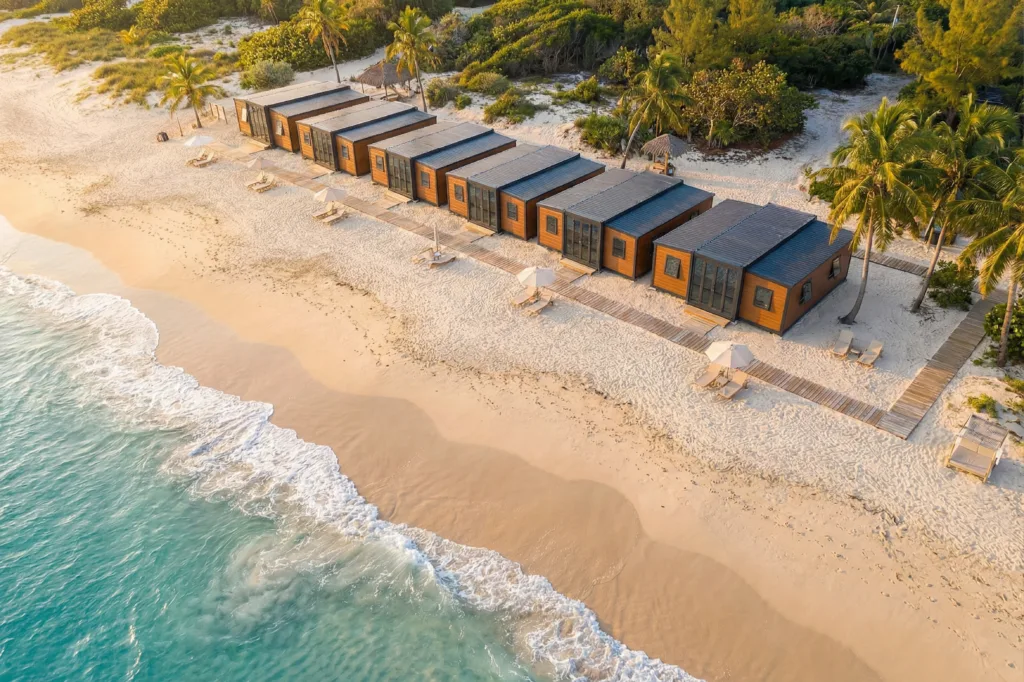
Tourism projects rarely start at full scale.
Operators test demand first — a few units, limited capacity — and expand only when bookings justify it.
Traditional construction makes that difficult. You either build everything upfront or face costly expansion later.
With container housing solutions, expansion becomes part of the plan.
A small eco-resort can launch with 5–10 units, then gradually add more based on occupancy rates.
Because units are produced off-site:
- Build time on location is minimal
- Environmental disruption is reduced
- New units can be added without shutting down operations
This phased approach reduces upfront risk while still allowing long-term growth.
2. Airbnb & Short-Term Rental Using Container Homes for Rental
In many regions, short-term rentals outperform traditional leasing — but only if supply can scale efficiently.
This is where container homes for rental offer a different advantage.
Instead of investing heavily in a single property, operators deploy multiple smaller units across different locations:
- Near tourist attractions
- On the outskirts of major cities
- In emerging travel destinations
This spreads risk while increasing occupancy potential.
More importantly, units can be standardized.
Same layout.
Same furnishing model.
Same operational setup.
That consistency reduces management complexity — especially when scaling beyond a few units.
Some operators start with just 2–3 units to test occupancy before expanding into multi-location clusters.
In practice, many operators validate demand with a small initial setup before scaling — turning what would normally be a high-risk build into a controlled, step-by-step expansion.
If you’ve looked at how different housing formats perform across scenarios, you’ll notice that expandable container house applications work across tourism, residential, and project-based use cases — not just one niche.
3. Long-Term Rental Housing with Container Homes (Urban & Workforce)
Not every project is short-term or tourism-driven.
In fact, one of the most stable uses of container homes for rental is long-term housing.
Two segments stand out:
Urban rental housing
- High demand for affordable units
- Limited land availability
- Pressure to deliver quickly
Workforce accommodation
- Construction and infrastructure projects
- Industrial zones
- Remote job sites
In both cases, speed matters more than architectural complexity.
The ability to deliver usable housing in weeks — rather than months — directly impacts revenue timelines.
And over time, operational cost becomes just as important.
If you’re evaluating long-term performance, it’s worth understanding how container prefab house buildings hold long-term value in real projects — especially in terms of maintenance cost and reusability.
And for residential investors targeting backyard rental income, expandable container ADUs have emerged as one of the highest-ROI models in the US market, with payback periods as short as 3–5 years.
4. Pop-Up Commercial Container Buildings for Fast Revenue
Not all revenue comes from housing.
Some investors use container-based systems for commercial container buildings — especially in short-cycle business models.
Typical examples include:
- Pop-up cafés
- Retail kiosks
- Exhibition spaces
- Temporary commercial streets
These projects benefit from:
- Fast setup
- Low commitment
- High location flexibility
Instead of signing long-term leases or investing in permanent construction, businesses can test locations with minimal risk.
If the concept works, they scale.
If not, they relocate.
That flexibility turns physical space into a testable asset, not a fixed cost.
5. Government & Emergency Container Housing Solutions
Some of the largest orders don’t come from private investors at all.
They come from:
- Government housing programs
- Disaster recovery projects
- Infrastructure development initiatives
In these scenarios, the priority is clear:
Speed. Scalability. Reliability.
Container housing solutions are often used because they can be:
- Delivered in bulk
- Installed quickly
- Reused across different phases of a project
For developers and suppliers, these projects offer:
- Large-volume orders
- Predictable demand
- Long-term partnerships
How to Launch a Profitable Container Housing Project Quickly
The biggest advantage of container-based systems isn’t just cost.
It’s how early you can start generating revenue.
In many cases, income begins before the project is fully completed.
Here’s how that works in practice.
Step 1: Choose the Right Business Model
Start with clarity.
Are you building for:
- Short-term rental?
- Long-term leasing?
- Commercial use?
- Government supply?
Each model has different requirements — and different timelines to profitability.
Step 2: Select a Strategic Location
Location still matters.
But with modular systems, you gain flexibility:
- Underserved suburban areas
- Tourist corridors
- Temporary project sites
The key is matching demand with deployment speed.
Step 3: Customize Your Units
Standardization is efficient — but targeted customization improves returns.
Common adjustments include:
- Interior layout (studio vs multi-room)
- Exterior design (branding or local style)
- Insulation (based on climate)
The goal isn’t to over-design.
It’s to align the product with the market.
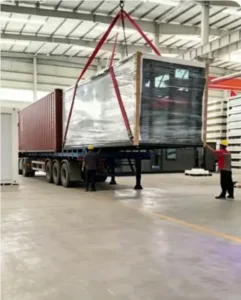
Step 4: Fast Production and Delivery
This is where modular systems outperform traditional builds.
Production happens in parallel with site preparation.
Transport and installation are scheduled in advance.
If you’re planning US-based projects, understanding logistics early is critical — especially how container house transport works from factory to US project site and how it impacts timelines.
Step 5: Start Pre-Leasing Before Completion
This is where many projects gain an edge.
Instead of waiting until everything is finished, operators:
- List units early
- Accept reservations
- Build occupancy before launch
That means revenue starts almost immediately after installation.
Sometimes even earlier.
Common Mistakes That Reduce ROI
Even with the right system, mistakes can slow down returns.
The most common ones are surprisingly simple.
- Ignoring Location Strategy
Fast deployment doesn’t fix weak demand.
A poorly chosen site will underperform regardless of build speed.
- Overlooking Product Differentiation
If every unit looks the same, pricing power drops.
Small design choices — layout, finishes, branding — can significantly impact occupancy.
- No Marketing or Pre-Leasing Plan
Many projects wait until completion to start marketing.
By then, valuable time is already lost.
- Underestimating Compliance Requirements
Especially in the US, regulations can affect timelines more than construction itself.
Before committing, it’s worth understanding how expandable container house projects move through US building code approvals and what that means for your schedule.
Frequently Asked Questions
How fast can I get ROI from container homes for rental?
With pre-leasing and fast deployment, most container rental projects start generating revenue within 3–6 months, with full payback periods of 3–7 years depending on the location and business model.
Backyard ADU rental projects in high-demand US markets can achieve payback in as little as 3 years.
Are container homes legal for rental in the US?
Yes, expandable container homes are legal for rental in most US states when properly certified and installed to meet local building codes.
Many cities now have specific guidelines for modular and container-based housing to streamline the approval process.
What is the average lifespan of a container home used for rental?
A properly maintained steel expandable container home has a lifespan of 25–30+ years, comparable to traditional housing.
This makes container homes for rental a strong long-term investment asset.
Final Thoughts: Fast ROI Comes From Process, Not Just Product
Container housing isn’t just about building faster.
It’s about changing the sequence of how projects happen.
Instead of:
Design → Build → Wait → Earn
It becomes:
Plan → Produce → Deploy → Earn → Scale
That shift is what allows container homes for rental to generate returns faster than traditional real estate models.
And in a market where time-to-income matters more than ever, that difference isn’t small.
It’s structural.
If you’re evaluating a container rental project, it’s worth mapping out your expected ROI, deployment timeline, and compliance requirements early — before key decisions lock in cost and long-term flexibility.
If needed, the GS Housing team can help you review your project assumptions and identify a practical path forward based on your target market.