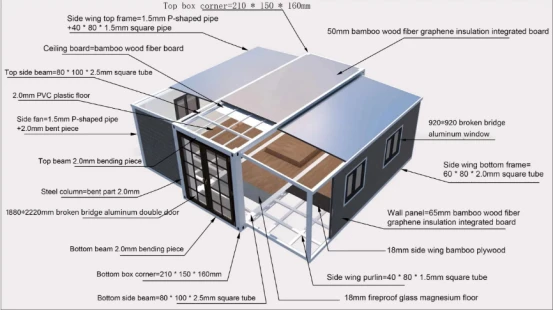
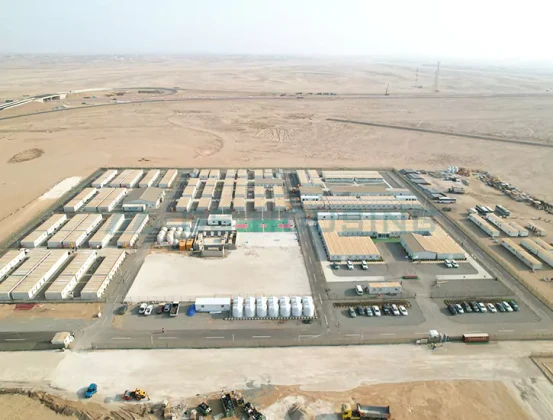
I’ve led remote housing projects across 60+ countries for GS Housing, and this guide focuses on what actually works in real off-grid conditions — not showroom concepts, but systems tested under pressure.This is especially true for any off-grid expandable container house deployed in extreme environments.
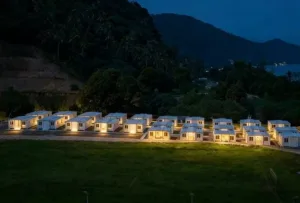
It’s 2:30 AM at a remote mining site.
The generator just failed.
The air inside the unit is heavy and humid.
Someone’s trying to sleep before a 12-hour shift — but it’s too hot, too noisy, and there’s no airflow.
This isn’t unusual.
It’s what remote living looks like on many projects today.
And this is exactly why more developers are turning to expandable container house solutions — not just for faster deployment, but to fix the part most people overlook:
How people actually live on-site in remote, off-grid environments.
If you’re researching an expandable container house, an off-grid container house, or prefab housing for remote projects, you’re not just comparing structures.
You’re trying to solve a bigger problem:
How do you create stable, comfortable, scalable living conditions — without relying on infrastructure that simply isn’t there?
The Hidden Costs of Poor Remote Housing (Beyond Construction)
On paper, remote housing looks simple.
In reality, this is where projects quietly lose money — and not because of construction.
Unreliable Infrastructure Creates Daily Risk
Power cuts.
Water shortages.
Weak connectivity.
If systems rely on local infrastructure, they fail at the worst possible moment.
For remote teams, that means no cooling, no clean water, and no communication — not just inconvenient, but operationally risky.
Extreme Environments Apply Constant Pressure
Remote housing doesn’t deal with occasional stress — it’s constant.
From desert heat to tropical humidity to freezing conditions, without proper integration:
Heat builds up quickly.
Condensation damages interiors.
Air quality drops fast.
Small issues turn into daily problems.
And honestly, most teams don’t realize how much this adds up until they’re dealing with it every single day.
Traditional Construction Slows Everything Down
Building in remote areas means:
Delays in transport, labor shortages, and unpredictable timelines.
Even simple structures take weeks.
By then, budgets are stretched, and teams are already struggling.
Poor Living Conditions Impact Project Performance
The part no one talks about:
People don’t perform well when they live poorly.
Fatigue, discomfort, and lack of privacy directly affect productivity, safety, and retention.
Over time, these hidden costs often outweigh the initial build cost.
How Expandable Container Houses Solve Remote Off-Grid Housing Challenges
This is where these systems start to make a real difference.
Expandable container house solutions don’t just improve construction — they improve how projects run day to day.
Fast Deployment That Keeps Projects Moving
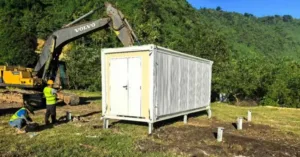
These units are factory-built, compact for transport, and installed in hours.
That’s why they’re widely used as quick deployment housing solutions across mining, infrastructure, and emergency projects.
No dependency on local labor.
No long setup timelines.
Off-Grid Systems That Work Independently
A modern off-grid container house can run on:
Solar power
Battery storage
Smart energy management
Water storage and reuse systems
When the grid fails, the system keeps running.
Smart Container Living That Improves Daily Life
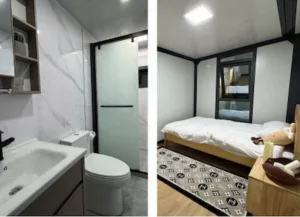
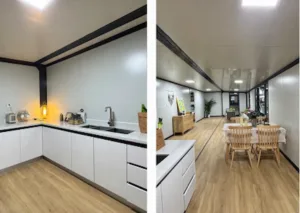
This is where smart systems really matter.
Temperature adjusts automatically.
Ventilation responds to air quality.
Energy use is optimized in real time.
Across GS Housing projects, this is often where clients notice the biggest difference — not in construction speed, but in everyday usability.
If you’ve explored smart expandable container house systems before, this is where those technologies start to show real value.
Built for Harsh Conditions from Day One
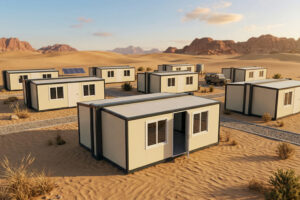
These units are designed — not adapted — for extreme environments.
They include:
Heat resistance
Moisture control
Durable structural systems
So they perform consistently over time, instead of degrading after months of use.
Flexible for Different Remote Applications
These systems are not limited to housing.
They’re used for:
Worker accommodation using 20ft expandable container house
Site offices
Medical units
Temporary facilities
And they scale easily as projects grow.
Why Expandable Container Houses Improve Off-Grid Living Conditions
Faster construction is just the starting point.
The real value shows up after people move in.
Stable Indoor Environments
Temperature, airflow, and lighting stay consistent regardless of outside conditions.
This alone significantly improves comfort — especially for teams working long shifts.
Lower Long-Term Operating Costs
With integrated systems:
Energy use drops
Maintenance becomes predictable
Emergency repairs are reduced
Many eco-friendly housing setups see measurable long-term savings.
Better Workforce Stability
Better living conditions lead to:
Lower turnover
More consistent productivity
Smoother operations
That’s a major advantage for remote projects.
From Basic Shelter to High-End Modular Living
These are no longer temporary shelters.
They’re high-end modular living environments with:
Smart systems
Modern interiors
Flexible layouts as featured in our 40ft expandable container house
A Quick Reality Check
Not every project needs full smart or off-grid integration.
In some cases, simpler systems are more practical.
The key is choosing what actually improves operations — not adding features for the sake of it.
The Future of Off-Grid Container Housing
The direction is clear:
More energy independence
More automation
Less reliance on external systems
We’re already seeing:
AI-driven energy systems
Fully off-grid communities
Integrated water and power solutions
The structure matters — but the system inside matters more.
Expandable Container House FAQ for Remote Projects
Can an expandable container house operate fully off-grid?
Yes. With solar, storage, and water systems, it can run independently without grid support.
How do these units perform in extreme environments?
They’re engineered for it — with insulation, ventilation, and moisture control designed for long-term use.
How fast can they be deployed?
In many cases, installation takes just a few hours per unit.
Are they difficult to maintain?
No. Systems are modular and designed for simple, predictable maintenance.
Can they scale for large projects?
Yes. They scale from small setups to large multi-unit camps without redesign.
Final Thoughts
Remote projects will always have constraints.
But how you handle those constraints makes all the difference.
An expandable container house today isn’t just about building faster.
It’s about creating stable, livable environments where traditional construction struggles.
After 20+ years in remote projects, GS Housing focuses on solutions that work in real conditions — not just on paper.
And in many cases, getting the system design right early makes a bigger difference than comparing prices later.
If you’re planning a remote project, we’re happy to get a customized expandable container house solution based on real project experience.