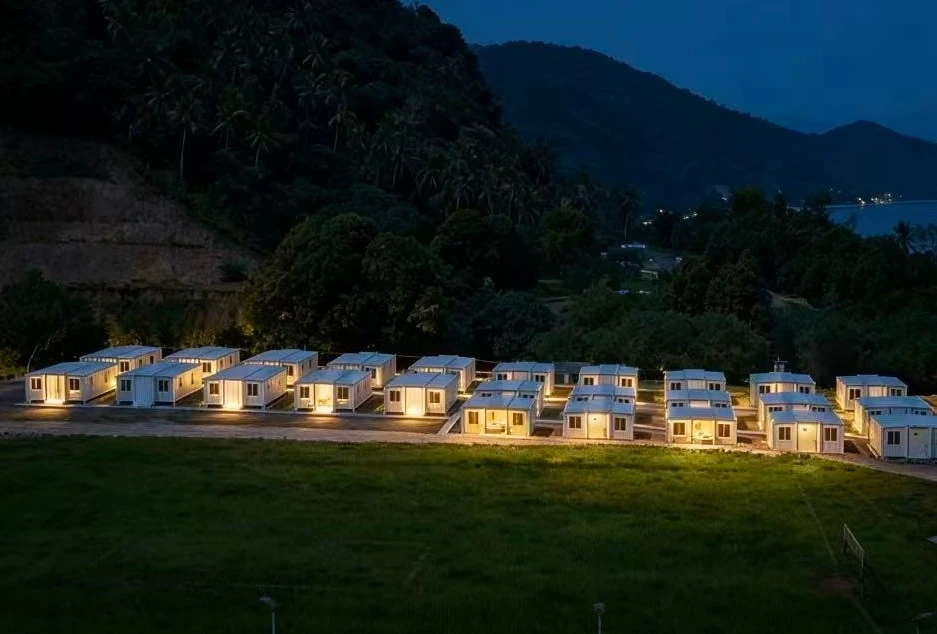
Most worker camp projects get it backwards.
They spend months choosing the right units, comparing prices, and checking material specs — and then rush the layout in a single afternoon.
But based on extensive experience across global worker camp projects with GS Housing, one thing is very clear:
A poor layout will undermine a well-built camp faster than any material issue.
You can have solid structures, reliable systems, even smart off-grid setups.
But if the layout doesn’t work, the entire camp feels it — every single day.
And if you’re looking into expandable container house layout ideas, worker camp housing solutions, or modular camp design, you’re not just planning buildings —
you’re shaping how people live, move, and operate on-site.
Today, expandable container house solutions are widely used across worker camp housing, prefab housing layout for workers, and modular camp design in mining, construction, and infrastructure projects. From small temporary camps to large-scale deployments, they’ve become one of the most practical and scalable housing solutions available.
Why Container House Layout Matters in Worker Camp Housing Solutions
On paper, a worker camp looks straightforward.
In practice, layout decisions affect almost everything that follows.
A well-planned container house layout directly impacts:
- Daily efficiency and logistics
- Worker comfort and rest quality
- Site safety and compliance
- Long-term operating costs
When layout is rushed or overlooked, problems show up quickly: congestion during shift changes, noise conflicts, long walking distances, and rising maintenance costs.
And honestly? Most teams don’t immediately connect those issues back to layout — but that’s almost always where they start.
Key Factors in Expandable Container House Camp Planning
Before you lock in any layout, take a step back.
What actually makes a camp run smoothly?
After watching these projects play out over the years, here’s what it usually comes down to:
Site Conditions & Climate
Terrain and environment shape everything.
- Sloped land often needs tiered layouts to avoid excessive groundwork
- Hot climates benefit from ventilation corridors and spacing between units
- Rain-heavy regions require proper elevation and drainage
Workforce Size & Density
A 50-person setup and a 500-person camp operate very differently.
You can’t simply scale one layout up and expect it to work.
Planning should account for:
- Accommodation density per unit
- Shared facility capacity
- Peak-time movement flow
Functional Zoning
Clear zoning makes a real difference in daily operations.
The most effective worker camp housing solutions separate:
- Quiet living areas
- Offices and admin spaces
- Dining and recreation
- Sanitary and utility zones
Without that separation, small issues add up quickly.
Future Expansion Flexibility
Project scope changes more often than expected.
A practical layout should allow you to:
- Add units without redesigning the entire site
- Reconfigure zones easily
- Install in phases based on project timelines
Proven Expandable Container House Layout Ideas for Worker Camps
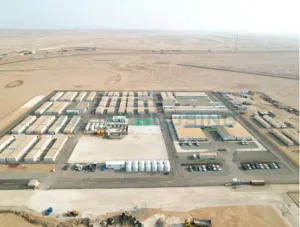
After looking at dozens of GS Housing worker camp projects across different regions, only a few layout types keep showing up in the ones that run well.
Linear Layout (Fast Deployment Camps)
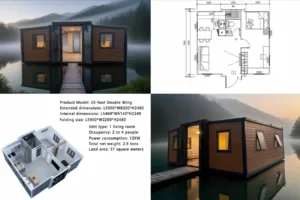
Best for short-term projects or limited land.
Units are arranged in simple rows, making expansion easy. This compact 20ft model is ideal for quick deployments, and its core design aligns with the practical unit standards we cover in our dedicated expandable container house design guide.
Quick to install and manage — but less efficient for large-scale camps.
Courtyard Layout (Balanced Comfort & Efficiency)
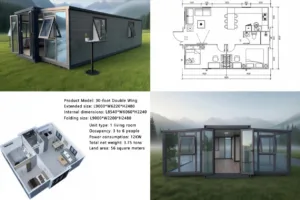
Best for mid-to-long-term camps.
Units are arranged around a central shared space. This layout creates better privacy and comfort, which is why we often pair it with the 30ft dual-wing units we designed for remote mining and workforce projects, as detailed in our custom expandable container design.
Improves airflow, natural light, and creates a safer, more controlled environment.
Cluster Layout (Large Workforce Camps)
Best for 300+ worker camps.
The site is divided into self-contained clusters.
This reduces congestion, improves management, and supports scalable modular camp design. Each cluster can be configured with mixed unit sizes to match team needs, a flexible approach we refine through hands-on expandable container house design for large-scale sites.
Integrated Layout (Multi-Functional Camps)
Best for long-term projects.
Combines accommodation, offices, and shared facilities into connected zones.
Reduces walking distance and improves overall efficiency, making it a top choice for permanent remote workforce sites.
Interior Layout Ideas That Improve Daily Comfort
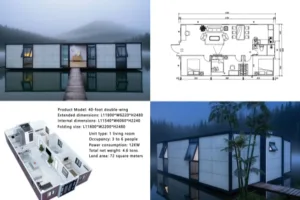
External layout matters — but interior planning has just as much impact over time. The 40ft double-wing unit offers ample space to optimize daily living, with layouts built around real worker needs, which we break down further in our expandable container house design deep dive.
A practical prefab housing layout for workers should include:
- Efficient sleeping setups (bunk vs single rooms)
- Clear wet/dry separation
- Durable storage solutions
- Basic noise control
This is one of those areas where small decisions make a big difference —
you don’t notice them on day one, but you feel them every day after that.
Smart Modular Camp Design Tips for Efficient Container House Layout
Modern expandable container house solutions improve more than just layout — they improve operations.
- Centralize utilities to simplify maintenance
- Use smart systems to manage energy and shared spaces
- Keep walking distances practical (within ~200m)
- Align layout with wind direction and sunlight
A well-planned layout often delivers more value than adding extra equipment later.
Not every project needs a complex layout — in many cases, a simple, well-executed plan performs better than an over-engineered one. For more details on unit-specific design choices that boost camp functionality, explore our complete guide to expandable container house design.
Common Worker Camp Layout Mistakes to Avoid
Even experienced teams run into these issues:
- Overcrowding units
- Ignoring terrain and drainage
- Mixing quiet and high-activity zones
- No space for expansion
- Underestimating shared facilities
These problems don’t always appear immediately —but over time, they create avoidable operational pressure.
How Good Layout Improves Project Performance
A well-designed modular camp design doesn’t just improve comfort — it improves results.
- Operating costs become easier to control
- Daily operations run more smoothly
- Worker retention improves
- Camp management becomes simpler
In many cases, layout decisions have a bigger long-term impact than the units themselves.
A Quick Reality Check
Not every project needs a complex layout.
In some cases, a simpler linear setup works better —as long as it fits how the site will actually be used.
Worker Camp Layout FAQ
What’s the best layout for a small worker camp?
Courtyard layouts usually provide the best balance for smaller camps.
How much land is needed per worker?
Around 70–100 sqm per person, depending on requirements.
Can layouts be adjusted later?
Yes. Modular systems allow flexible reconfiguration.
What’s the most cost-effective layout?
Linear layouts for short-term projects.
How to design for extreme climates?
Use ventilation, shading, spacing, and orientation strategies.
Final Thoughts
Most people focus on the units first when planning a worker camp.
But in practice, layout is what determines whether a camp actually works long-term.
A well-designed expandable container house layout turns individual units into a complete, high-performing system.
At GS Housing, the focus isn’t just on supplying units —
it’s on helping clients build practical, real-world worker camp housing solutions that actually perform.
And in most cases, getting the layout right early makes a bigger difference than anything that comes later.
If you’re planning a worker camp, explore our expandable container house solutions or contact our team to get a customized layout plan.