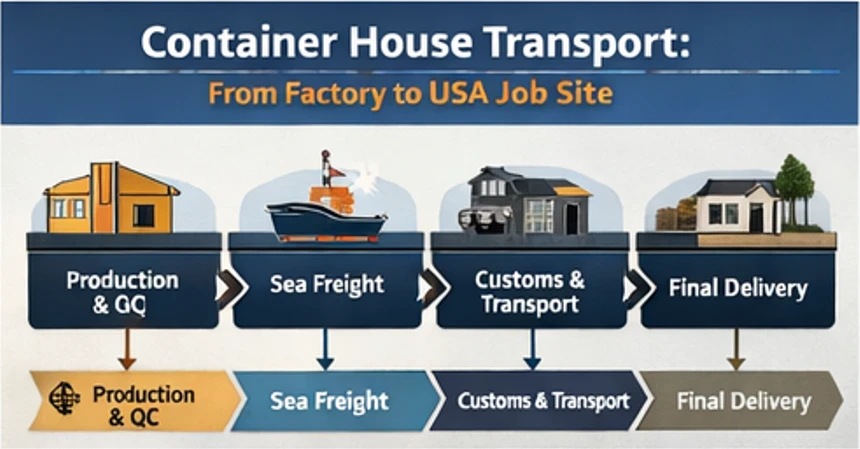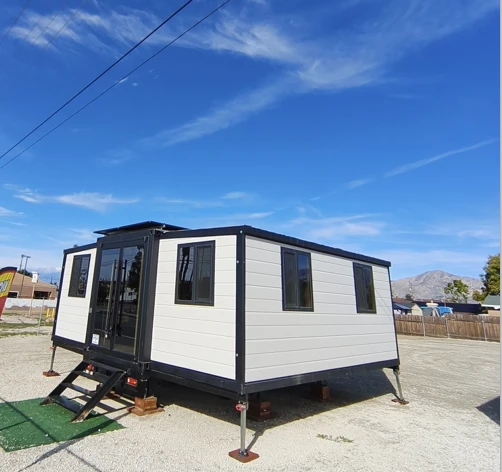
Why Modular ADU Investment Is Growing in the US (2026 Market Trends)
The US housing shortage isn’t new — but in 2026, it’s creating a very specific kind of opportunity.
Not large-scale developments.
Not luxury builds.
But smaller, faster, income-generating units that can be deployed with less friction.
That’s where modular ADUs (Accessory Dwelling Units) are getting serious attention from investors and developers.
Industry groups like the National Association of Realtors estimate that the US housing gap could exceed 6.5 million units by 2026, with entry-level rental demand continuing to grow year by year. That imbalance is exactly what’s driving interest in modular ADU solutions.
Rising rental demand, zoning changes, and limited land availability are all pushing the market toward higher-density, lower-footprint housing.
In many cities:
. Backyard ADUs are now actively encouraged
· Multi-unit ADU projects are being approved faster
· Rental demand continues to outpace supply
For investors, the question becomes straightforward:
Can a modular ADU model deliver better returns than traditional construction?
Modular ADU Rental Income in the USA (2026): What Returns Are Investors Seeing?
Let’s start with the number that matters most — income.
In many US markets:
. Monthly ADU rental income typically ranges from $1,200 to $3,000+
· In high-demand areas, short-term rentals can go even higher
But income alone doesn’t define ROI.
Speed matters just as much as yield.
Traditional ADU builds often take:
. 6–12 months to complete
· Additional time for permits, inspections, and scheduling delays
That means capital is tied up long before revenue begins.
With modular ADU systems, that timeline looks very different.
As explored in how expandable container homes compare with traditional ADUs, factory-built units can move from production to installation in a matter of weeks — not months. Avoiding long on-site construction cycles is a key reason many investors shift toward modular approaches.
That difference directly impacts:
. Time to first rental income
· Payback period
· Overall cash flow efficiency
Key Costs That Define Modular ADU Investment ROI
Every ADU investment comes down to three core cost drivers.
1. Construction Cost
Traditional ADU:
. $150,000–$300,000 (site-built, labor-intensive)
Modular ADU (expandable container-based systems):
. ~$40,000–$80,000 depending on configuration
The difference isn’t just materials — it’s the process:
. Less on-site labor
· Fewer delays
· More predictable production timelines
In this guide, “modular ADU” refers specifically to expandable container-based ADU systems, which fold for transport and unfold on-site.
2. Permits & Compliance (Often the Real Bottleneck)
This is where many projects slow down.
Even prefab or modular ADU units must meet US building regulations — and approval timelines vary significantly by location.
If you’re planning larger-scale or commercial ADU deployments, understanding compliance early is critical. You can see how our modular units meet US building code requirements in our compliance guide, including fire ratings, structural engineering, and local approval factors.
The takeaway is simple:
Faster construction doesn’t help if approvals aren’t aligned from the start.
3. Maintenance & Lifecycle Cost
Long-term ROI is often decided here.
Based on real project data (see why container-based modular buildings retain long-term value), steel-based modular structures typically require less maintenance — with no termite exposure and reduced structural degradation over time.
Over a 20-year period, that difference can translate into significant cost savings per unit.
Traditional vs Expandable Modular ADU: ROI & Investment Comparison
Here’s a simplified comparison based on real US project scenarios for a ~37㎡ unit:
| Metric | Traditional Site-Built ADU | Expandable Modular ADU |
| Upfront Cost | $180,000–$250,000 | $45,000–$75,000 |
| Time to Rental Income | 8–14 months | 8–12 weeks |
| Annual Net Rental Income | $14,400–$24,000 | $14,400–$24,000 |
| Payback Period | 7–12 years | 3–5 years |
| 20-Year ROI | 60–90% | 180–280%* |
*Based on typical rental occupancy and moderate appreciation; actual returns vary by market.
From a homeowner perspective, this is about convenience.
From an investor perspective, it’s about capital efficiency and repeatability.
Scalable Expandable ADU Solutions for Investors
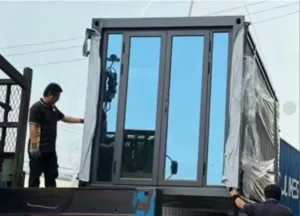
The biggest advantage of modular ADU systems isn’t just lower cost.
It’s scalability.
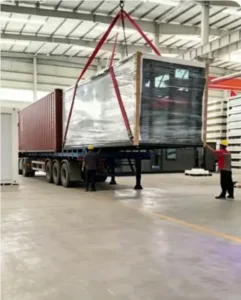
Expandable ADU designs are engineered to fold compactly for transport, allowing multiple units to be shipped in a single container. This reduces logistics cost per unit and makes multi-site deployment much more practical.
For investors and developers, this creates four key advantages:
1. Multi-Unit Deployment
. Batch production
· Parallel installation across multiple sites
2. Predictable Cost Structure
. Fewer unexpected overruns
· Stable pricing across projects
3. Faster Portfolio Expansion
. Shorter build cycles
· Faster reinvestment
4. Asset Flexibility
. Relocation
· Reuse
· Cross-project deployment
This directly connects to the concept behind how modular buildings retain value beyond a single project lifecycle — a key factor in long-term ROI.
A Practical Scenario: Modular ADU Investment in Action
Consider a small developer planning to add rental units across several properties.
With traditional construction:
. Projects run sequentially
· Delays accumulate
· Capital remains locked
With expandable ADU systems:
. Units are produced in parallel
· Installation takes days instead of months
· Rental income begins earlier
In a typical mid-sized scenario:
. 10–15 units deployed across multiple sites
· Average monthly rent: ~$1,800 per unit
· Total monthly income: ~$18,000–$27,000
· Payback period: around 3–4 years
Once the model is proven, scaling becomes significantly easier.
Long-Term ADU Investment: What Determines ROI and Value
No investment is risk-free.
Zoning changes, site conditions, and rental demand all play a role.
What expandable ADU systems do is reduce exposure by:
. Lowering upfront capital requirements
· Shortening deployment timelines
· Allowing relocation if needed
At a practical level, long-term performance depends on:
. Time to revenue
· Total cost of ownership
· Reusability
· Scalability
Traditional ADUs can perform well — but modular ADU systems tend to deliver more consistent results across these factors.
Are Modular ADUs a Good Investment in 2026?
In many cases, yes.
Not simply because they cost less.
But because they function differently as assets.
An expandable ADU:
. Generates income sooner
· Requires less ongoing maintenance
· Scales more efficiently
· Remains flexible across projects
For investors focused on rental income and portfolio growth, that combination is hard to ignore.
Final Thoughts: ADU Investment Is Moving Toward Systems, Not Projects
The biggest shift in 2026 isn’t just more ADU development.
It’s how those units are delivered.
From one-off construction projects
to repeatable, system-based housing models.
That shift is what makes expandable ADU strategies increasingly relevant.
If you’re evaluating opportunities, it helps to look at the full picture:
. Construction experience → avoiding long on-site disruption
· Compliance and approvals → understanding regulatory pathways
· Long-term value → evaluating lifecycle performance
Together, these factors determine whether an ADU project simply gets built —
or actually performs as a long-term investment.
If you’re comparing different approaches, it’s worth evaluating these variables early — especially before design decisions lock in cost, timeline, and long-term flexibility.
At this stage, most investors are no longer asking ‘if’ — but ‘how to structure it correctly’.
For projects that require clearer cost modeling or deployment planning, you can discuss your assumptions with a team that understands both modular construction and US project constraints.